
Bed bug evidence
Cimex lectularius
Photographs of the signs that bed bugs leave behind, each labelled with what it may indicate. Compare what you have found at your property against these references.
If the signs here match what you have found, the treatment side is covered under our chemical-free heat treatment service.
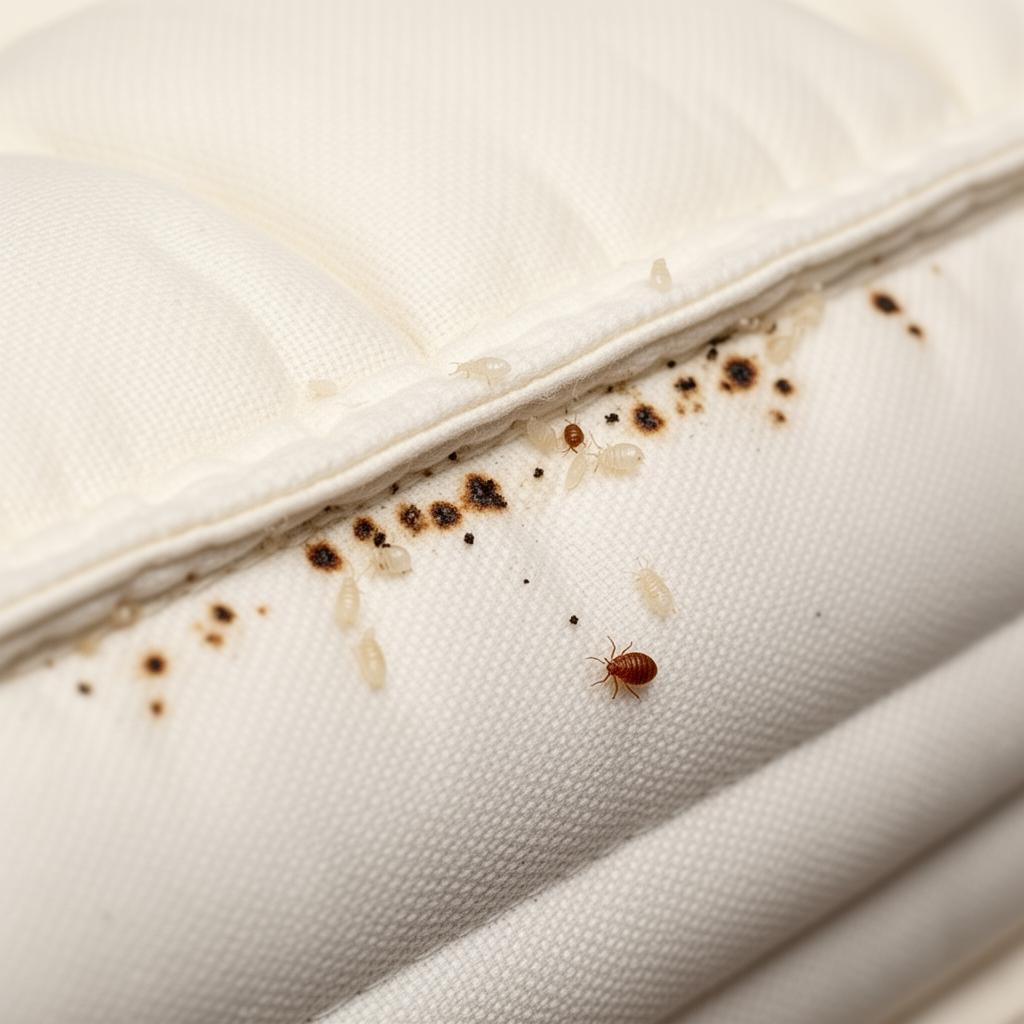 Faecal spotting
Faecal spotting on a mattress seam
Dark pin-head spotting and cast skins along a mattress seam — the definitive early sign.
What this may indicate: Harbourage within the bed itself. Spotting concentrated at seams usually means a young, localised infestation.
- Area
- Bedroom
- Stage
- Inspection
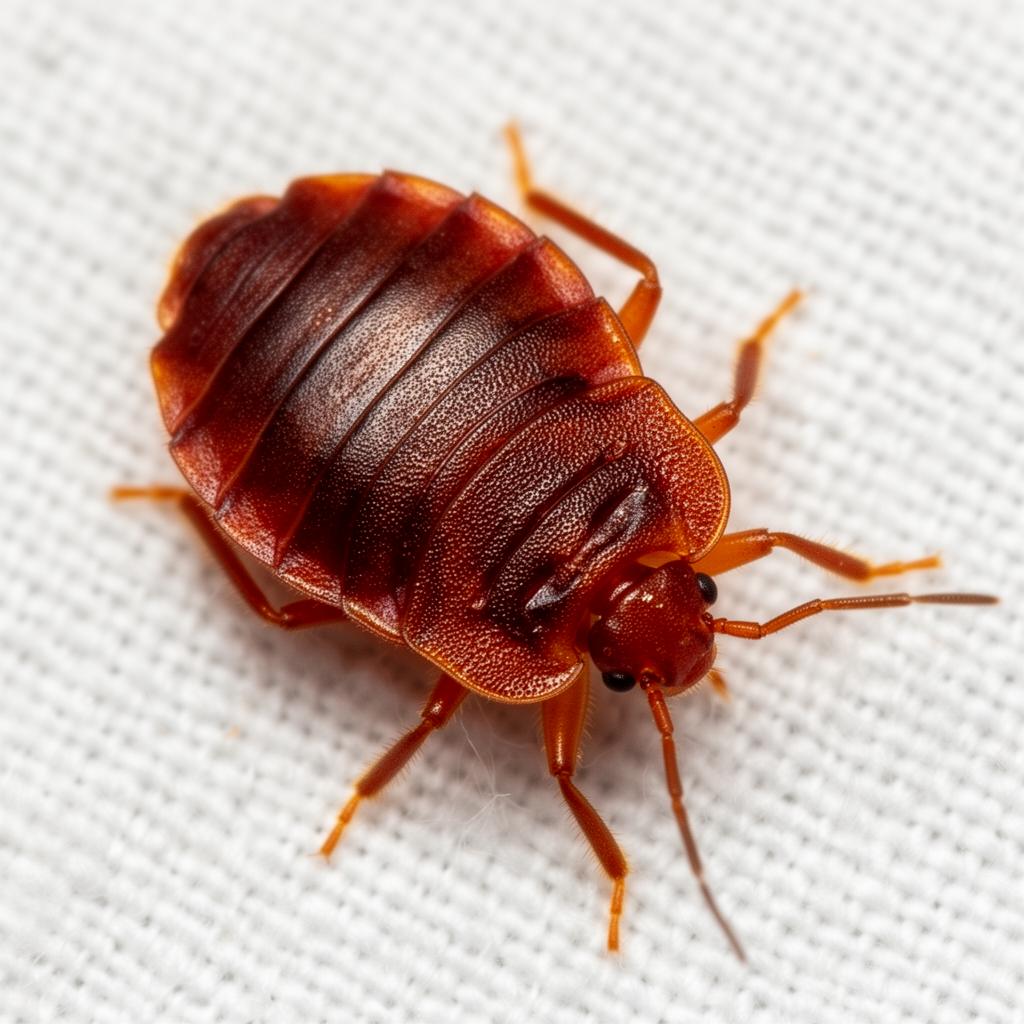 Identification
Adult bed bug
Adult Cimex lectularius — flat, oval, reddish-brown, roughly the size of an apple pip.
What this may indicate: Confirmed identification. Bed bugs are commonly mistaken for carpet beetles or young cockroaches.
- Area
- Bedroom
- Stage
- Reference
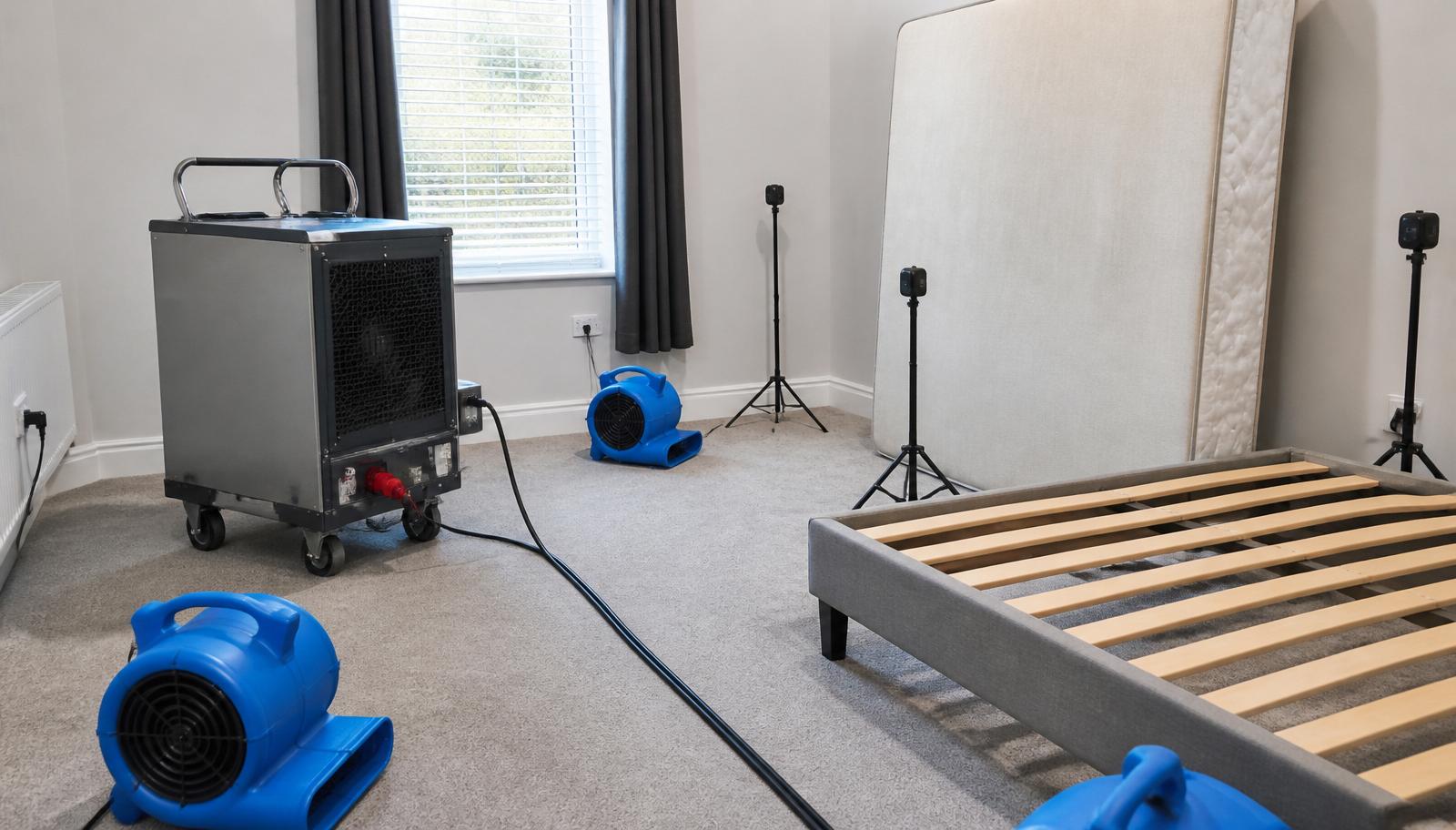 Treatment setup
Heat treatment setup
Heaters, air movers and wireless probes positioned before a heat treatment begins.
What this may indicate: How a room is configured so heat reaches harbourage inside frames, skirting and voids — not just the air.
- Area
- Bedroom
- Stage
- Preparation
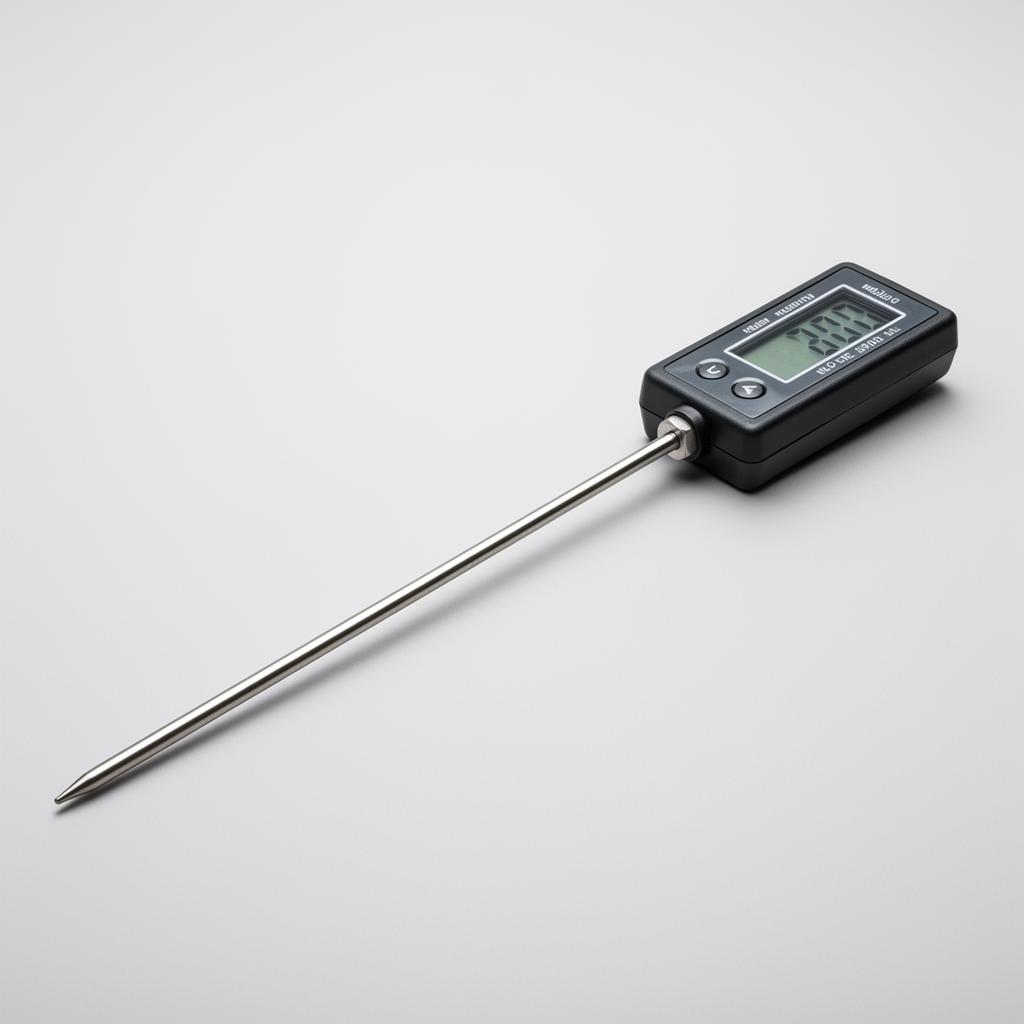 Temperature verification
Temperature probe at a harbourage point
A wireless probe placed at a harbourage point rather than in open air.
What this may indicate: Lethal temperature is evidenced where the insects actually are, which is what determines the result.
- Area
- Bedroom
- Stage
- Verification
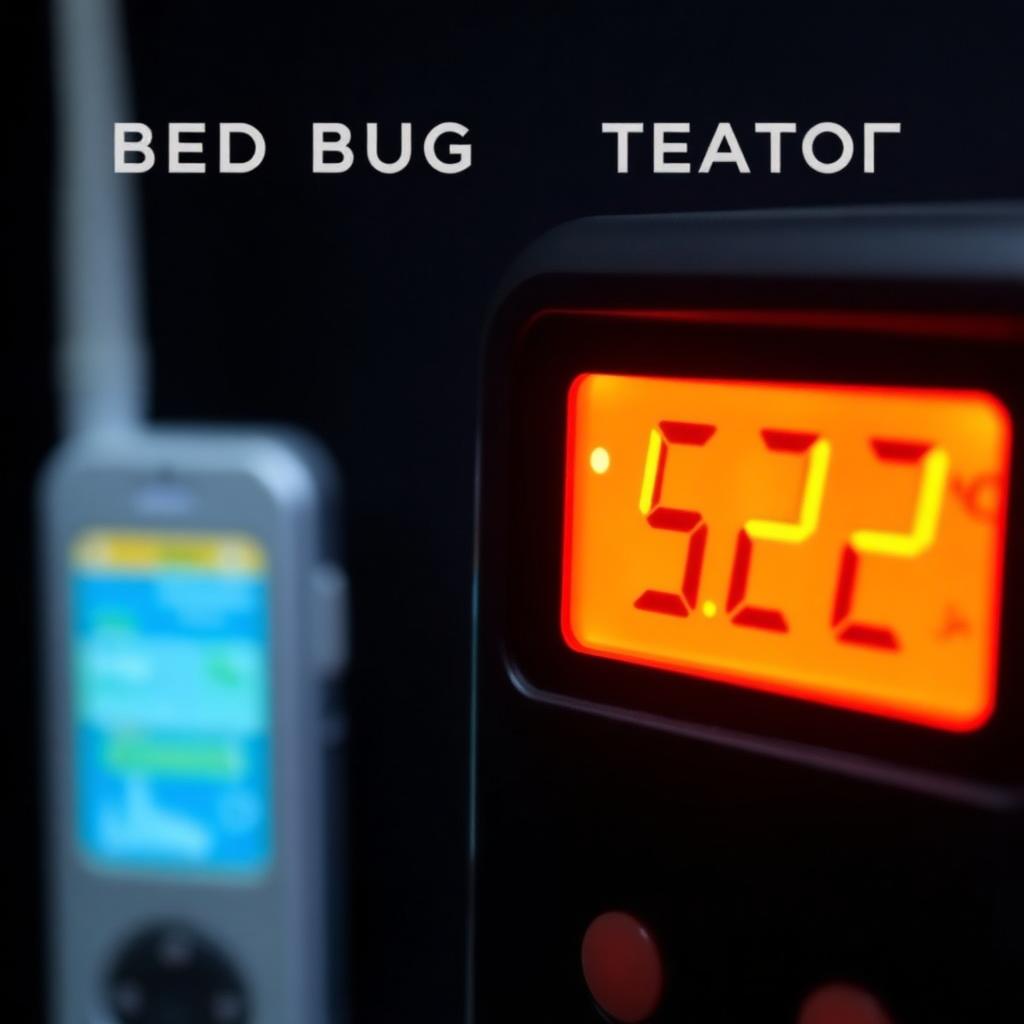 Monitoring
Live temperature monitoring
Room temperatures logged continuously across the treatment window.
What this may indicate: A recorded temperature history, which is what makes a heat treatment verifiable rather than assumed.
- Area
- Bedroom
- Stage
- Verification
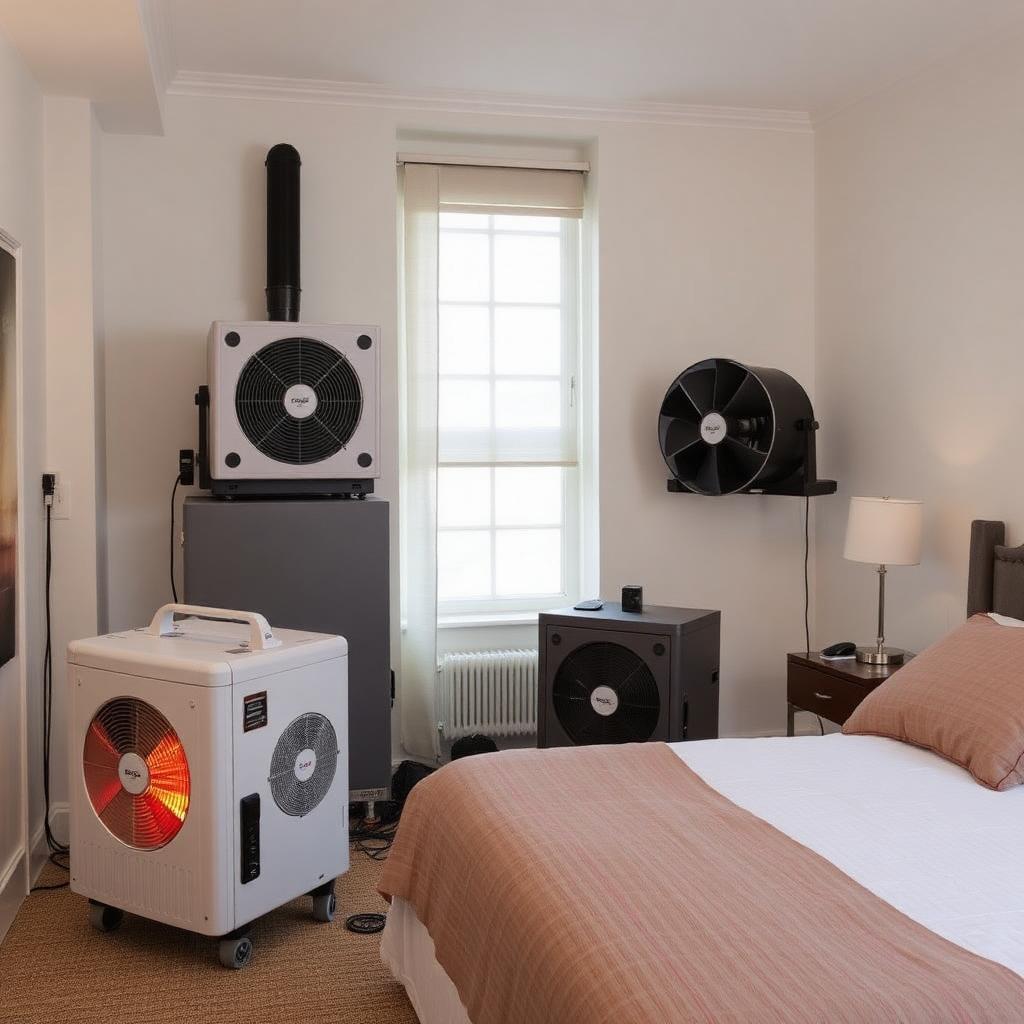 Treatment setup
Heat treatment equipment
The heaters and circulation equipment used on a whole-room bed bug heat treatment.
What this may indicate: The scale of equipment required to hold a room at lethal temperature for several hours.
- Area
- Not specified
- Stage
- Treatment