
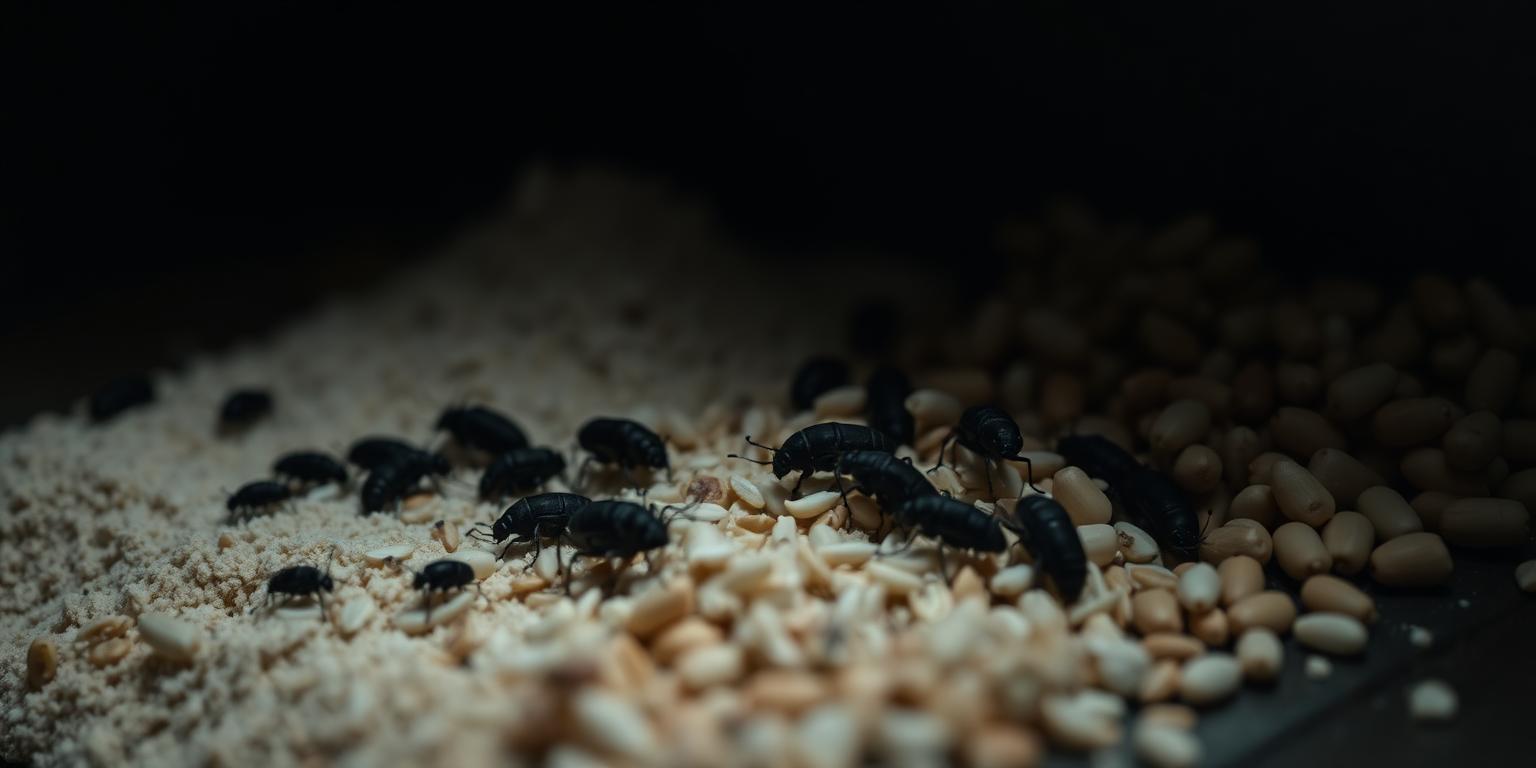
Stored Product Insects control across Hertfordshire
Control of beetles, weevils and moths affecting flour, grain and dry goods.
Signs of stored product insects
- Small beetles, weevils or moths in or around dry food packaging
- Webbing, larvae or fine powder in flour, cereals, rice or pulses
- Damaged or holed packaging on long-stored dry goods
Why it matters
- Contamination and waste of food stock — significant cost to businesses
- Failed audits and environmental health issues for food premises
- Cross-infestation to other dry goods if untreated
Prevention tips
- Rotate stock using first-in, first-out and check goods on arrival
- Store dry goods in sealed, pest-proof containers
- Keep storage areas clean, dry and well-ventilated
A brief history of stored product insects
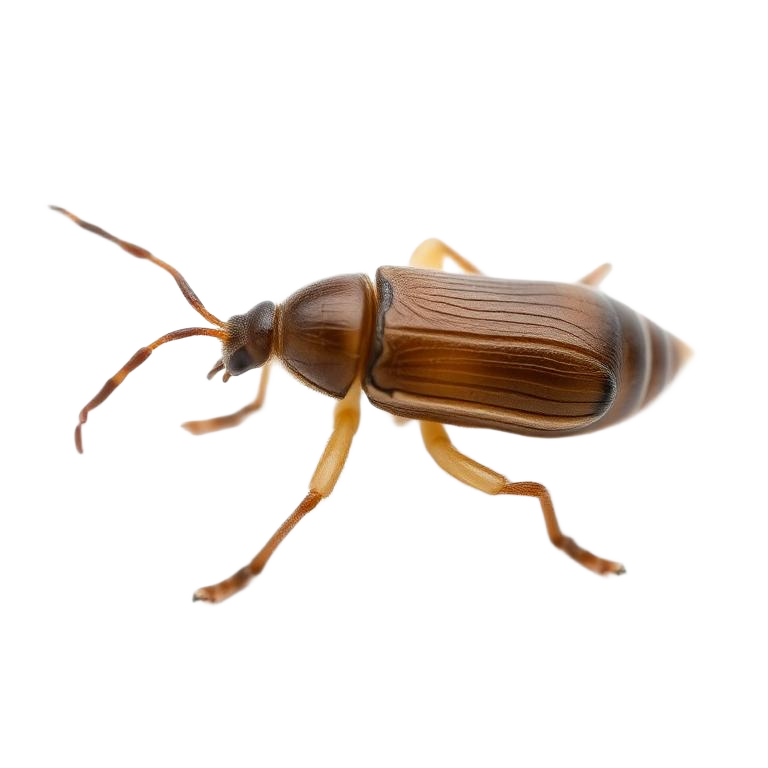
Stored product insects have followed human grain stores ever since farming began, and they remain a key challenge for the modern food industry.
Stored Product Insects in Hertfordshire
Stored product insects have a deep history in Hertfordshire, a county shaped by grain. The great malting towns of Ware, Baldock and Hitchin once supplied much of London's brewing trade, and the windmills and watermills along the Lea, Stort and Mimram processed huge quantities of wheat and barley — all of it prime habitat for grain weevils, flour beetles and warehouse moths. Maltsters and millers traditionally relied on constant turning of stock, cool storage and rigorous cleaning to keep infestations in check, supplemented from the Victorian era onwards by fumigation. Today, Hertfordshire's modern bakeries, food manufacturers and distribution centres around Hatfield and Hemel Hempstead face the same fundamental challenge in a global supply chain, and our work combines detailed inspection, stock disposal, targeted treatment and pheromone monitoring to keep audits clean and product safe.
Key milestones
- ~10,000 years agoBirth of agriculture
Grain weevils and flour beetles spread with the first cereal stores of early farming societies.
- Ancient Egypt & RomeTombs and granaries
Grain weevils have been recovered from pharaonic tombs and Roman granary deposits.
- Age of sailShips' biscuit weevils
Royal Navy crews famously contended with weevil-riddled biscuit on long voyages.
- TodayModern supply chains
Global trade, long storage times and warm warehouses keep mills, bakeries and food manufacturers on alert.
How we treat stored product insects
Step 1
Detailed inspection of storage areas to identify the species and source
Step 2
Removal and disposal of infested stock under controlled conditions
Step 3
Residual insecticide treatment of shelves, voids and harbourages plus pheromone monitoring
Speak to a stored product insect specialist today
Tell us a little about the problem and a local technician will call you back to confirm a price and an appointment — typically the same working day.
- Fixed quotes — no call-out fees
- Same-day & weekend appointments where possible
- Discreet, unmarked vehicles available
- Fully insured technicians
Ask any question about stored product insects
Type a question below and our AI assistant will answer instantly — no waiting, no forms.
Practical advice on stored product insects
If you suspect stored product insects in your home or business, act early — small problems are far quicker, cheaper and less disruptive to treat than an established infestation. Try to note where you see activity, at what time of day, and whether it is concentrated around food, water, warmth or hidden harbourages. Photographs of any insects, droppings or damage are genuinely useful when you call us, because they help us identify the species and bring the right products on the first visit.
In the meantime, focus on the basics: rotate stock using first-in, first-out and check goods on arrival; store dry goods in sealed, pest-proof containers; keep storage areas clean, dry and well-ventilated. Avoid spraying supermarket products around the area you suspect is the nest or harbourage — many over-the-counter sprays repel insects and push them deeper into wall voids, cavities and adjoining rooms, which makes professional treatment slower and more expensive. If you live in a flat or terrace, let neighbours know what you're seeing; stored product insects rarely respect property boundaries and a coordinated approach is almost always more effective than treating one property in isolation.
Our Hertfordshire technicians are happy to talk through what you're seeing before you commit to a treatment. Call 01727 601 007 for honest advice — if it isn't a stored product insect problem, or if simple housekeeping will resolve it, we'll tell you.
For how treatment itself is carried out, see commercial pest-control services.
Other insects we treat
Got a stored product insect problem?
Call us today for honest advice and a fast appointment across Hertfordshire.