
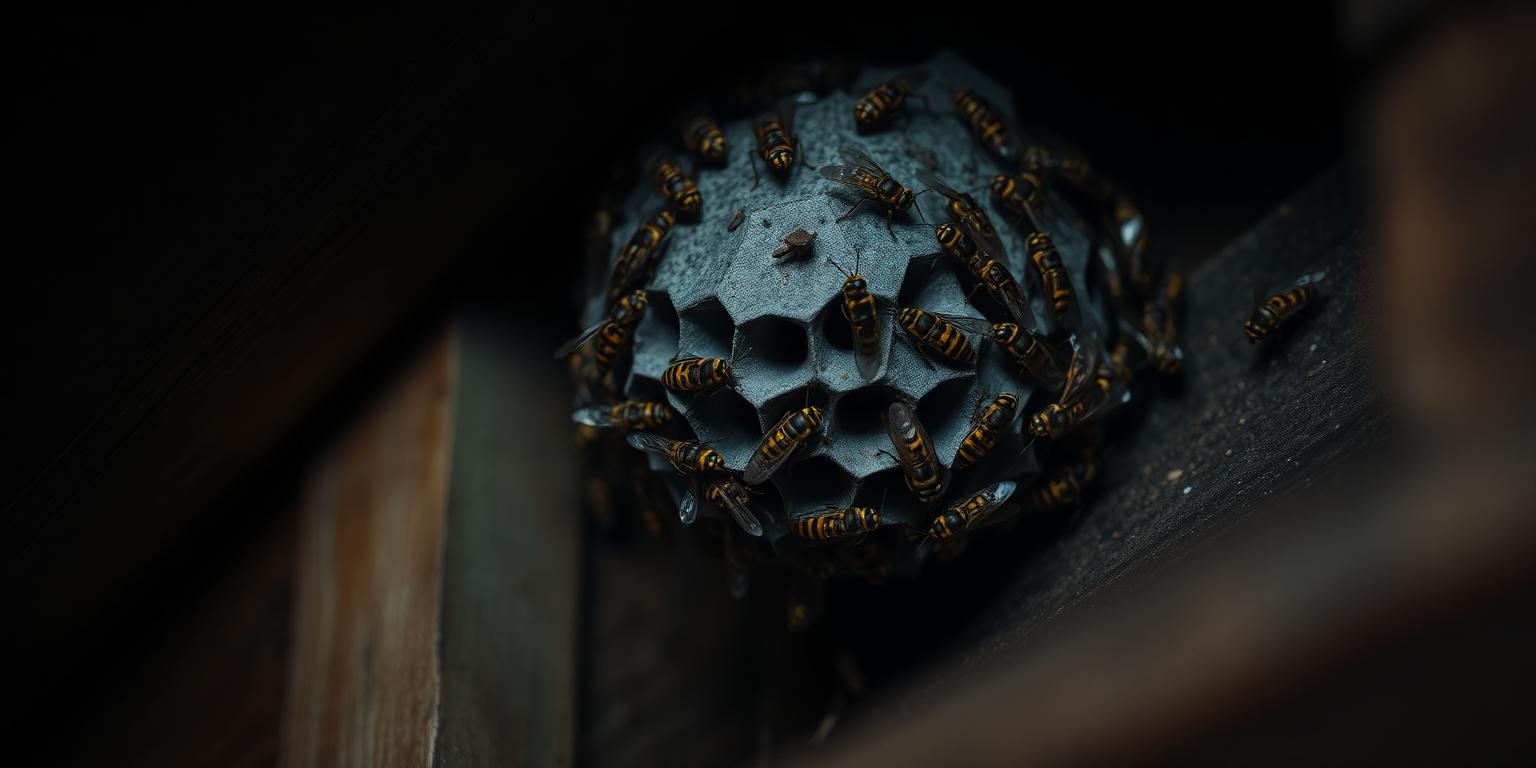
Wasps control across Hertfordshire
Same-day wasp nest removal across Hertfordshire — safe and fully insured.
Signs of wasps
- Steady stream of wasps coming and going from a single point
- Visible papery nest in lofts, sheds, wall cavities or under eaves
- Increased aggressive wasp activity in late summer
Why it matters
- Painful stings, with risk of severe allergic reaction (anaphylaxis)
- Multiple stings if a nest is disturbed
- Structural staining and damage from large abandoned nests
Prevention tips
- Seal small gaps around eaves, soffits and air bricks in early spring
- Keep bins lidded and clear up fallen fruit and sugary spills
- Check sheds, lofts and outbuildings for early-stage nests
A brief history of wasps
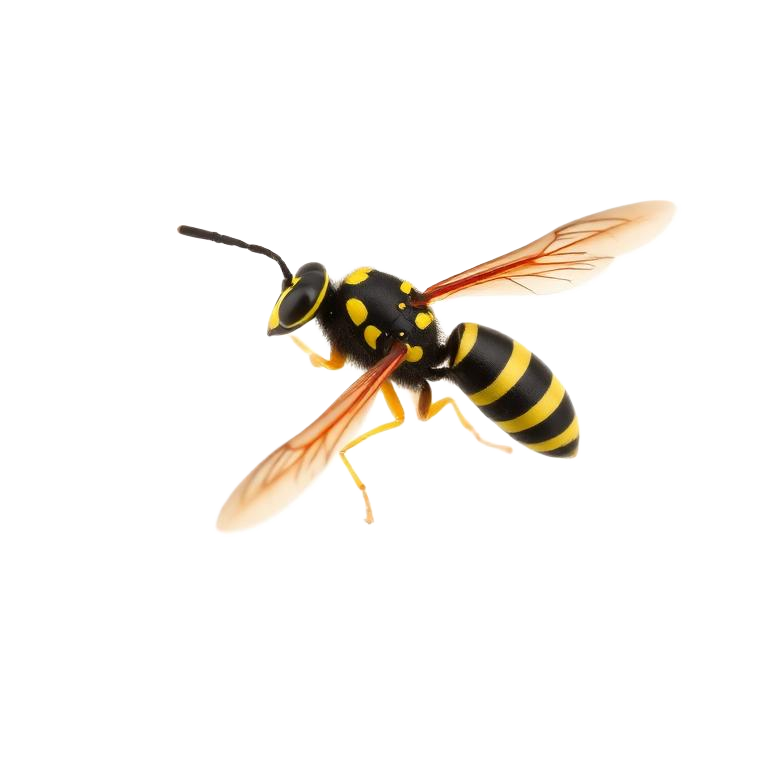
Social wasps have been building paper nests for well over 100 million years and even inspired the human invention of paper.
Wasps in Hertfordshire
Wasps have been a familiar late-summer nuisance across Hertfordshire for centuries, with nests turning up in the timber-framed cottages of St Albans, the orchards around Hertford and the brick farmhouses of the Lea Valley. For generations, dealing with a nest was a rough-and-ready affair — smoking it out with damp straw, dousing it with paraffin or simply knocking it down after dark and hoping for the best. By the early 1900s, local rat-catchers and "vermin men" had begun offering wasp work as a sideline, often using dusts that were nearly as hazardous to the householder as they were to the wasps. The post-war boom in suburban housing across Watford, Hemel Hempstead and Stevenage brought a sharp rise in nests tucked into lofts, soffits and cavity walls, and with it the first properly trained pest control technicians serving the county. Today's Hertfordshire wasp work uses targeted, low-residue insecticides and full PPE to clear most nests safely in under half an hour.
Key milestones
- 100+ million years agoAncient nest builders
Fossils show social wasps were already chewing wood into paper-like nests in the age of dinosaurs.
- 18th centuryInspired papermaking
European naturalists observed wasps pulping wood and used the idea to refine industrial papermaking.
- Spring & early summerBeneficial predators
Common and German wasps hunt caterpillars and other insects to feed their growing brood.
- Late summerPicnic nuisance
With brood-rearing finished, workers switch to sugary foods and become the familiar pub-garden pest.
How we treat wasps
Step 1
Safe identification and risk assessment of the nest location
Step 2
Professional insecticidal dust applied directly to the nest entrance
Step 3
Return visit to remove the nest where access is safe
Speak to a wasp specialist today
Tell us a little about the problem and a local technician will call you back to confirm a price and an appointment — typically the same working day.
- Fixed quotes — no call-out fees
- Same-day & weekend appointments where possible
- Discreet, unmarked vehicles available
- Fully insured technicians
Ask any question about wasps
Type a question below and our AI assistant will answer instantly — no waiting, no forms.
Wasps: in-depth advice
Practical advice on wasps
If you suspect wasps in your home or business, act early — small problems are far quicker, cheaper and less disruptive to treat than an established infestation. Try to note where you see activity, at what time of day, and whether it is concentrated around food, water, warmth or hidden harbourages. Photographs of any insects, droppings or damage are genuinely useful when you call us, because they help us identify the species and bring the right products on the first visit.
In the meantime, focus on the basics: seal small gaps around eaves, soffits and air bricks in early spring; keep bins lidded and clear up fallen fruit and sugary spills; check sheds, lofts and outbuildings for early-stage nests. Avoid spraying supermarket products around the area you suspect is the nest or harbourage — many over-the-counter sprays repel insects and push them deeper into wall voids, cavities and adjoining rooms, which makes professional treatment slower and more expensive. If you live in a flat or terrace, let neighbours know what you're seeing; wasps rarely respect property boundaries and a coordinated approach is almost always more effective than treating one property in isolation.
Our Hertfordshire technicians are happy to talk through what you're seeing before you commit to a treatment. Call 01727 601 007 for honest advice — if it isn't a wasp problem, or if simple housekeeping will resolve it, we'll tell you.
For how treatment itself is carried out, see wasp and hornet nest removal.
Got a wasp problem?
Call us today for honest advice and a fast appointment across Hertfordshire.