
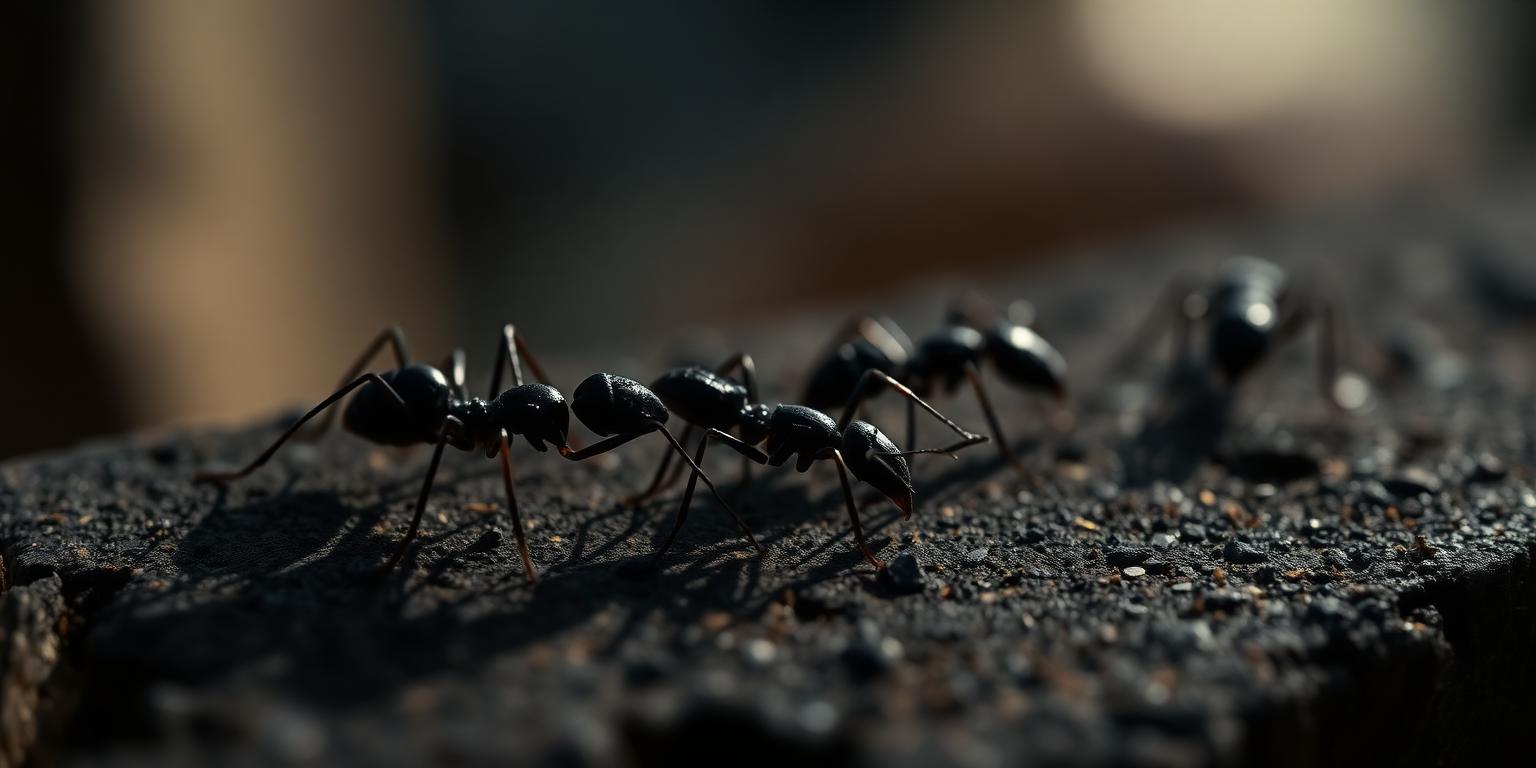
Black garden ant
Lasius niger
Britain's most familiar ant — a soil-nesting species that forages indoors for sugar and produces the mass flying-ant emergence each July.
Quick facts
- Worker size
- 3–5mm
- Colony size
- 4,000–15,000
- Queen lifespan
- 15+ years
- Flying ant day
- Mid–late July
Also known as: Common black ant, Garden ant
Species at a glance
Low risk- Scientific name
- Lasius niger
- Alternative names
- Common black ant, Garden ant
- Average size
- 3–5mm worker
- Average weight
- Under 5mg
- Activity
- Diurnal
- Diet
- Sugars, honeydew, sweet spills and, seasonally, protein and fats to feed developing larvae.
- Typical habitat
- Patios, driveways, wall bases and sub-floor voids
- Active season
- May to August, swarming mid-July
Why the low risk rating: Nuisance foraging and food contamination rather than health risk.
About the black garden ant
The black garden ant nests in soil, under paving and in wall cavities, sending long foraging trails indoors in search of sugar. Each colony is founded by a single queen who may live 15 years or more. The colony's annual nuptial flight — 'flying ant day' — is triggered by warm, humid, still weather and happens across a region almost simultaneously.
- Diet
- Sugars, honeydew, sweet spills and, seasonally, protein and fats to feed developing larvae.
- Breeding
- A single queen founds and heads the colony, which can hold 4,000–15,000 workers. New queens are produced for the July nuptial flight.
- Lifespan
- Workers around a year; queens can live 15 years or more.
How to identify it
- Workers 3–5mm, uniformly dark brown to black
- Queens 8–9mm and considerably bulkier
- Winged reproductives appear in July and August only
- Fine soil spoil heaps at the edges of paving and doorways
Signs, behaviour and where they live
Signs of activity
- Persistent trails along skirting, worktops and window frames
- Fine soil heaps between paving slabs or at door thresholds
- Ants concentrated around a specific sugar source
- Winged ants indoors in July and August
Behaviour
- Lay pheromone trails that other workers follow precisely
- Farm aphids for honeydew on garden plants
- Forage indoors mainly for sugar, and for protein when brood is being reared
- Colonies are perennial — the nest, not the trail, is the target for control
Where you'll find them
- Soil beneath paving slabs, patios and garden walls
- Cavity walls and beneath door thresholds
- Under decking, in raised beds and against sunny south-facing walls
Seasonal activity in Hertfordshire
Twelve-month activity profile for black garden ants, based on our Hertfordshire call-out records.
- JanJanuary: Low activity
- FebFebruary: Low activity
- MarMarch: Low activity
- AprApril: Rising activity
- MayMay: Rising activity
- JunJune: Rising activity
- JulJuly: High activity
- AugAugust: High activity
- SepSeptember: Rising activity
- OctOctober: Moderate activity
- NovNovember: Low activity
- DecDecember: Low activity
- Peak period
- May to August
- Right now
- Rising activity in September
Indoor trails peak in warm dry spells; the flying-ant emergence across Hertfordshire is usually in mid to late July.
Ants are usually becoming less noticeable as the season turns. Indoor trails peak in warm dry spells; the flying-ant emergence across Hertfordshire is usually in mid to late July.
Current local data is limited. The status shown is based primarily on established seasonal behaviour across Hertfordshire. Last reviewed 1 July 2026.
See all Hertfordshire Pest Watch activityWhy black garden ants matter
Health risks
- Contamination of food and preparation surfaces
- Nuisance rather than a significant health hazard
- Pharaoh's ants, a different species, do present a genuine risk in hospitals and care settings
Property damage
- Undermining of paving, patios and path bedding by soil excavation
- Occasional short-circuits where nests establish in electrical enclosures
Black garden ants across Hertfordshire
Black garden ants thrive in the chalky soils of the Chilterns and the warm brickwork of Hertfordshire's market towns — St Albans, Hertford and Berkhamsted see consistent summer trail activity through patios and door thresholds.
Common misconceptions
Killing the trail solves it.
Workers on a trail are a small fraction of the colony. Unless the queen is reached the trail rebuilds within days.
Flying ants are a different species.
They are the winged reproductives of the same colony, on their annual mating flight.
Boiling water is an effective treatment.
It kills surface workers and damages paving; the nest below survives intact.
Prevention and professional treatment
How to prevent them
- Seal gaps around doors, windows, air bricks and pipework
- Clear sugar spills promptly and store sweet foods sealed
- Repoint paving and repair path bedding where nests recur
- Manage aphids on plants close to the house
How we treat them
- Identify the species and follow trails back to the nest location
- Professional gel bait carried back to the colony to reach the queen
- Residual treatment to entry points and external nest sites
- Advice on proofing and paving repair to prevent recurrence
Treatments for black garden ants
Black garden ant questions, answered
The questions our technicians are asked most often about black garden ants in Hertfordshire.
Ask anything about the black garden ant
This assistant is reading the black garden ant profile with you — there's no need to say which pest you mean. Answers are educational and evidence-based.
Questions are recorded anonymously so we can improve HPE Knowledge. No personal data is stored.
Related content in HPE Knowledge
Related knowledge
- Prevention guidePractical proofing and housekeeping steps for this species.
- AI Pest IdentifierNot sure what you have? Describe it and get an identification.
- Hertfordshire Pest WatchSeasonal activity across Hertfordshire, reviewed by our technicians.
- Treatment LibraryDocumented treatments and case studies from real jobs.
- Evidence GalleryLabelled field photography showing exactly what to look for.
- Professional Service RecordsSigned, time-stamped records issued after every visit.
Helpful next steps
Professional treatment
Speak to a technician about black garden ants at your property. Fixed price confirmed after a brief inspection.
View treatment optionsView evidence gallery
Labelled field photography showing exactly what the signs look like in a real property.
See the evidenceBrowse the Treatment Library
Documented case studies from treatments carried out across Hertfordshire.
Open the libraryAsk HPE Knowledge
Put a question directly to our black garden ant assistant and get an evidence-based answer.
Ask a questionCheck CoverageMaps Pro
Confirm we cover your town, village or postcode and see local activity.
Check coverageContact Hertfordshire Pest Experts
Prefer to talk it through? Call the team or send the details of what you have found.
Get in touchOr head back to the HPE Species Library to compare species.