
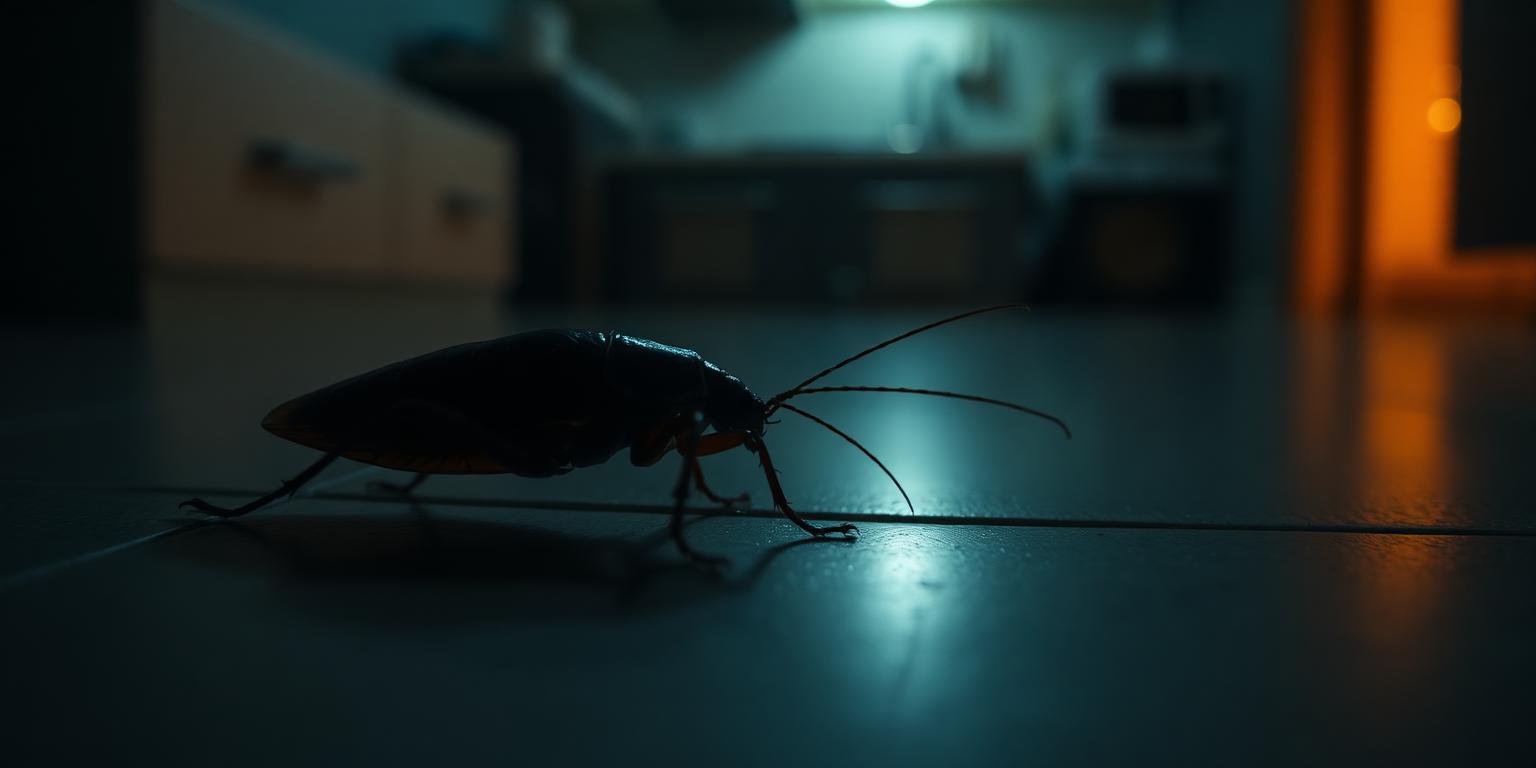
German cockroach
Blattella germanica
The most serious indoor cockroach in the UK — small, fast-breeding and almost always associated with warm kitchen and appliance voids.
Quick facts
- Adult size
- 12–15mm
- Nymphs per egg case
- 30–40
- Life cycle
- 6–8 weeks
- Programme
- 3–4 visits
Also known as: Steam fly, Croton bug
Species at a glance
Severe risk- Scientific name
- Blattella germanica
- Alternative names
- Steam fly, Croton bug
- Average size
- 12–15mm adult
- Average weight
- Around 100mg
- Activity
- Nocturnal
- Diet
- Anything organic — food debris, grease, starches, soap, glue and even paper.
- Typical habitat
- Warm kitchen voids, motor housings and commercial food areas
- Active season
- Year-round in heated buildings
Why the severe risk rating: Food-poisoning bacteria, allergens and food-hygiene enforcement risk.
About the german cockroach
The German cockroach is a tropical species that survives in Britain only inside heated buildings. It is the most difficult cockroach to eradicate because females carry the egg case until hatching, protecting it from insecticide, and because populations concentrate in inaccessible warm voids behind appliances and pipework.
- Diet
- Anything organic — food debris, grease, starches, soap, glue and even paper.
- Breeding
- A female produces 4–8 egg cases in a lifetime, each containing 30–40 nymphs. Egg-to-adult takes as little as 6–8 weeks in a warm kitchen.
- Lifespan
- Adults typically 4–6 months.
How to identify it
- 12–15mm, light brown with two dark parallel stripes behind the head
- Fully winged but rarely flies
- Nymphs are darker with a pale stripe down the back
- Egg cases (oothecae) are 6–9mm, tan and carried by the female until hatching
Signs, behaviour and where they live
Signs of activity
- Live insects scattering when a light is switched on at night
- Small dark droppings resembling ground pepper along shelf edges and hinges
- Discarded egg cases and shed skins in unit voids
- A distinctive oily, musty smell in heavier infestations
- Smear marks in humid areas behind appliances
Behaviour
- Strictly nocturnal — daytime sightings suggest a heavy population
- Thigmotactic: press their bodies into tight cracks and voids
- Aggregate around warmth, moisture and food debris
- Spread between flats via shared service ducts and waste pipework
Where you'll find them
- Behind and beneath ovens, fridges, dishwashers and motor housings
- Kitchen unit voids, hinge recesses and cracked tiling
- Warm service ducts and pipe runs in flats and commercial kitchens
- Bin stores and food-preparation areas
Seasonal activity in Hertfordshire
Twelve-month activity profile for german cockroaches, based on our Hertfordshire call-out records.
- JanJanuary: Moderate activity
- FebFebruary: Moderate activity
- MarMarch: Moderate activity
- AprApril: Moderate activity
- MayMay: Moderate activity
- JunJune: Rising activity
- JulJuly: Rising activity
- AugAugust: Rising activity
- SepSeptember: Moderate activity
- OctOctober: Moderate activity
- NovNovember: Moderate activity
- DecDecember: Moderate activity
- Peak period
- Year-round indoors
- Right now
- Typical activity in September
Heated buildings mean German cockroaches show almost no seasonality — infestations progress continuously until treated.
Cockroaches are usually becoming less noticeable as the season turns. Heated buildings mean German cockroaches show almost no seasonality — infestations progress continuously until treated.
Current local data is limited. The status shown is based primarily on established seasonal behaviour across Hertfordshire. Last reviewed 1 July 2026.
See all Hertfordshire Pest Watch activityWhy german cockroaches matter
Health risks
- Mechanical transmission of Salmonella, E. coli and other food-poisoning organisms
- Potent asthma and allergy trigger, particularly for children
- Contamination of food and preparation surfaces requiring disposal
- Serious regulatory consequences for food businesses
Property damage
- Contamination and disposal of stored food
- Damage to packaging, labels and paper goods
- Business closure risk in commercial food premises
German cockroaches across Hertfordshire
German cockroach work across Hertfordshire is concentrated in commercial kitchens and blocks of flats, where shared service ducts allow a single untreated unit to reinfest an entire riser.
Common misconceptions
Cockroaches only infest dirty premises.
They need warmth, moisture and any organic residue. Immaculate kitchens with a warm appliance void are perfectly viable habitat.
Sprays clear them.
Surface sprays scatter the population deeper into voids. Professional gel baiting, applied to harbourage, is the reliable approach.
You can eliminate them in one visit.
Protected egg cases mean a treatment programme with follow-ups is essential — anyone promising one visit is guessing.
Prevention and professional treatment
How to prevent them
- Clean grease and debris from appliance voids and unit kickboards
- Seal cracks and gaps around pipework, tiling and unit joints
- Store food in sealed containers and empty bins nightly
- In flats, coordinate treatment across affected units and shared ducts
How we treat them
- Full survey with monitors to map harbourage and population extent
- Professional gel bait applied directly to harbourage points
- Insect growth regulator to break the breeding cycle
- Monitoring stations to measure progress objectively between visits
- Programme of follow-up visits until monitors record zero catch
German cockroach questions, answered
The questions our technicians are asked most often about german cockroaches in Hertfordshire.
Ask anything about the german cockroach
This assistant is reading the german cockroach profile with you — there's no need to say which pest you mean. Answers are educational and evidence-based.
Questions are recorded anonymously so we can improve HPE Knowledge. No personal data is stored.
Related content in HPE Knowledge
Related species
Related services
Related knowledge
- Prevention guidePractical proofing and housekeeping steps for this species.
- AI Pest IdentifierNot sure what you have? Describe it and get an identification.
- Hertfordshire Pest WatchSeasonal activity across Hertfordshire, reviewed by our technicians.
- Treatment LibraryDocumented treatments and case studies from real jobs.
- Evidence GalleryLabelled field photography showing exactly what to look for.
- Professional Service RecordsSigned, time-stamped records issued after every visit.
Helpful next steps
Professional treatment
Speak to a technician about german cockroaches at your property. Fixed price confirmed after a brief inspection.
View treatment optionsView evidence gallery
Labelled field photography showing exactly what the signs look like in a real property.
See the evidenceBrowse the Treatment Library
Documented case studies from treatments carried out across Hertfordshire.
Open the libraryAsk HPE Knowledge
Put a question directly to our german cockroach assistant and get an evidence-based answer.
Ask a questionCheck CoverageMaps Pro
Confirm we cover your town, village or postcode and see local activity.
Check coverageContact Hertfordshire Pest Experts
Prefer to talk it through? Call the team or send the details of what you have found.
Get in touchOr head back to the HPE Species Library to compare species.