
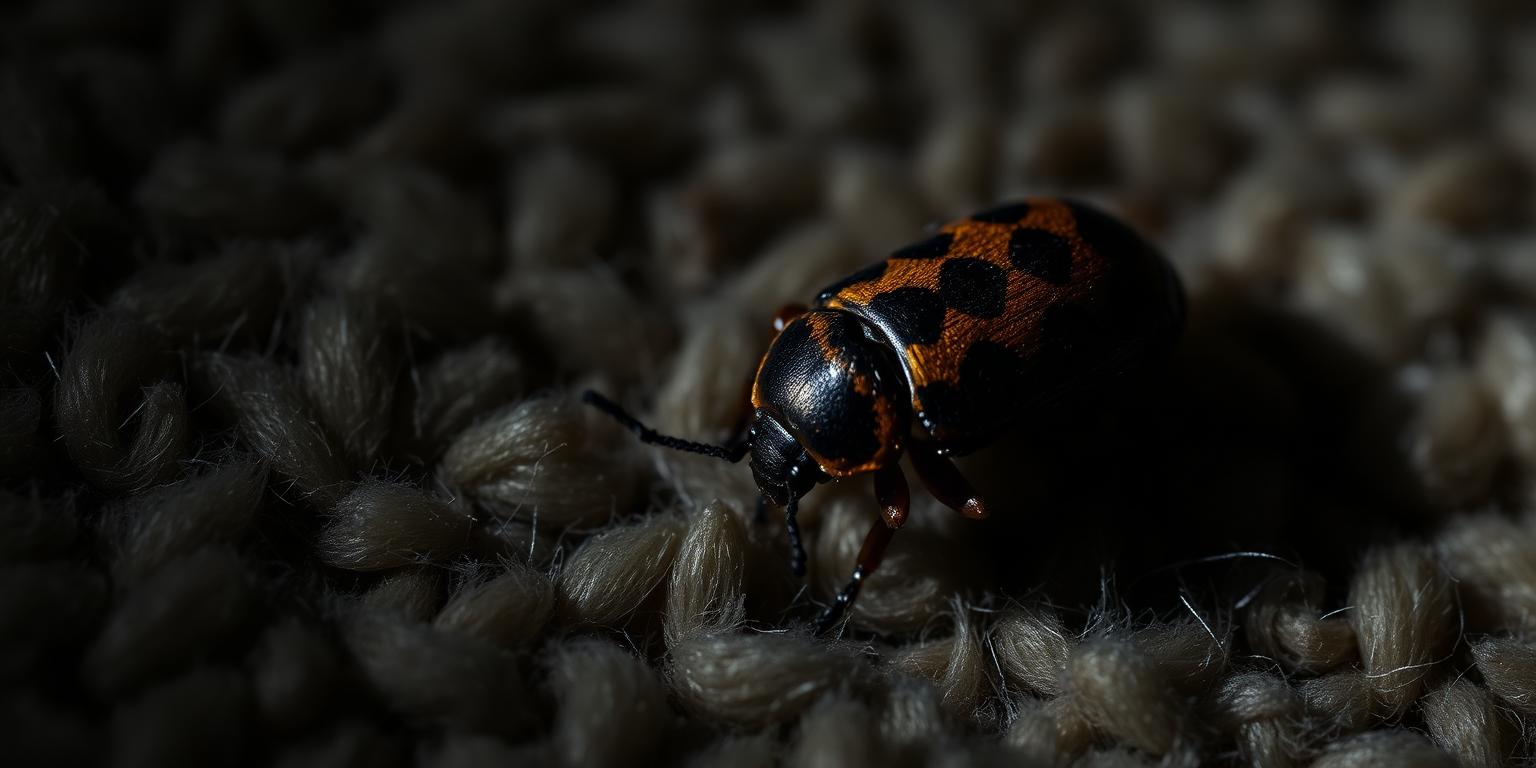
Varied carpet beetle
Anthrenus verbasci
A textile pest often mistaken for carpet moth — its bristly 'woolly bear' larvae chew clean, sharp-edged holes in wool and natural fibres.
Quick facts
- Adult size
- 2–4mm
- Generations per year
- 1
- Peak sightings
- Spring
- Common source
- Old bird nests
Also known as: Woolly bear (larva), Museum beetle
Species at a glance
Moderate risk- Scientific name
- Anthrenus verbasci
- Alternative names
- Woolly bear (larva), Museum beetle
- Average size
- 2–4mm adult
- Average weight
- Under 5mg
- Activity
- Diurnal
- Diet
- Larvae feed on keratin — wool, fur, feathers, hair and dried insect remains. Adults feed on pollen and nectar outdoors.
- Typical habitat
- Carpet edges, airing cupboards and old bird nests in eaves
- Active season
- Spring, as adults emerge
Why the moderate risk rating: Larval damage to natural fibres; larval hairs can irritate skin.
About the varied carpet beetle
The varied carpet beetle is a small, mottled beetle whose adults feed harmlessly on pollen outdoors. The damage is done by the larvae — 'woolly bears' — which feed on keratin in carpets, clothing, felt, hair and dried insect remains. Old bird nests in eaves and lofts are a classic hidden source that reinfests a property year after year.
- Diet
- Larvae feed on keratin — wool, fur, feathers, hair and dried insect remains. Adults feed on pollen and nectar outdoors.
- Breeding
- A female lays 40–100 eggs, often in a bird nest or undisturbed textile. The larval stage lasts most of the year.
- Lifespan
- Adults a few weeks; larvae up to a year.
How to identify it
- Adults 2–4mm, rounded, mottled black, white and brown
- Larvae 4–5mm, brown and covered in bristly hairs
- Damage is a clean, sharp-edged hole rather than a threadbare patch
- Shed larval skins accumulate along skirting and in drawers
Signs, behaviour and where they live
Signs of activity
- Small mottled beetles on window sills in spring
- Clean, sharp-edged holes in wool carpet or clothing
- Bristly 'woolly bear' larvae and shed skins along skirting
- Damage concentrated beneath furniture and at carpet edges
Behaviour
- Adults fly to light and are often first seen on window sills in spring
- Larvae avoid light and feed slowly in undisturbed material
- One generation a year in UK conditions
- Larvae can survive long periods without feeding
Where you'll find them
- Carpet edges, under-furniture areas and beneath fitted wardrobes
- Airing cupboards and drawers holding wool and natural fibres
- Loft voids containing old bird nests or dead insects
- Window sills, where adults collect before flying out
Seasonal activity in Hertfordshire
Twelve-month activity profile for carpet beetles, based on our Hertfordshire call-out records.
- JanJanuary: Low activity
- FebFebruary: Moderate activity
- MarMarch: Rising activity
- AprApril: High activity
- MayMay: High activity
- JunJune: Rising activity
- JulJuly: Moderate activity
- AugAugust: Moderate activity
- SepSeptember: Low activity
- OctOctober: Low activity
- NovNovember: Low activity
- DecDecember: Low activity
- Peak period
- March to June
- Right now
- Low activity in September
Adults emerge in spring and gather at windows — this is usually the first sign, months after larval damage began.
Why carpet beetles matter
Health risks
- Larval hairs can cause a bumpy, itchy skin reaction sometimes mistaken for bites
Property damage
- Holes in wool carpets, rugs, clothing and upholstery
- Damage to natural-fibre insulation, felts and stored collections
Carpet beetles across Hertfordshire
Across Hertfordshire, carpet beetle cases are strongly associated with older properties that have open eaves and long-established loft bird nests — Harpenden, Berkhamsted and rural village housing feature heavily.
Common misconceptions
It's a carpet moth.
Beetle damage is sharp-edged holes; moth damage is threadbare patches with webbing. The treatment approach differs.
The bites are from bed bugs.
Reactions to larval hairs are frequently misdiagnosed as bites — identification matters before anyone treats for bed bugs.
There's no source if I can't see one.
The source is very often an old bird nest in the eaves or loft, well away from the damaged room.
Prevention and professional treatment
How to prevent them
- Remove old bird nests from eaves, lofts and chimney voids
- Vacuum carpet edges and under furniture regularly
- Store natural-fibre clothing clean and sealed
- Fit mesh to vents and eaves gaps to deter nesting
How we treat them
- Identify the species and trace the source, including loft and nest inspection
- Remove infested nest material where present
- Residual treatment to carpet edges, voids and affected storage
- Follow-up inspection the next spring emergence where required
Treatments for carpet beetles
Varied carpet beetle questions, answered
The questions our technicians are asked most often about carpet beetles in Hertfordshire.
Ask anything about the varied carpet beetle
This assistant is reading the varied carpet beetle profile with you — there's no need to say which pest you mean. Answers are educational and evidence-based.
Questions are recorded anonymously so we can improve HPE Knowledge. No personal data is stored.
Related content in HPE Knowledge
Related services
Related knowledge
- Prevention guidePractical proofing and housekeeping steps for this species.
- AI Pest IdentifierNot sure what you have? Describe it and get an identification.
- Hertfordshire Pest WatchSeasonal activity across Hertfordshire, reviewed by our technicians.
- Treatment LibraryDocumented treatments and case studies from real jobs.
- Evidence GalleryLabelled field photography showing exactly what to look for.
- Professional Service RecordsSigned, time-stamped records issued after every visit.
Helpful next steps
Professional treatment
Speak to a technician about carpet beetles at your property. Fixed price confirmed after a brief inspection.
View treatment optionsView evidence gallery
Labelled field photography showing exactly what the signs look like in a real property.
See the evidenceBrowse the Treatment Library
Documented case studies from treatments carried out across Hertfordshire.
Open the libraryAsk HPE Knowledge
Put a question directly to our varied carpet beetle assistant and get an evidence-based answer.
Ask a questionCheck CoverageMaps Pro
Confirm we cover your town, village or postcode and see local activity.
Check coverageContact Hertfordshire Pest Experts
Prefer to talk it through? Call the team or send the details of what you have found.
Get in touchOr head back to the HPE Species Library to compare species.