
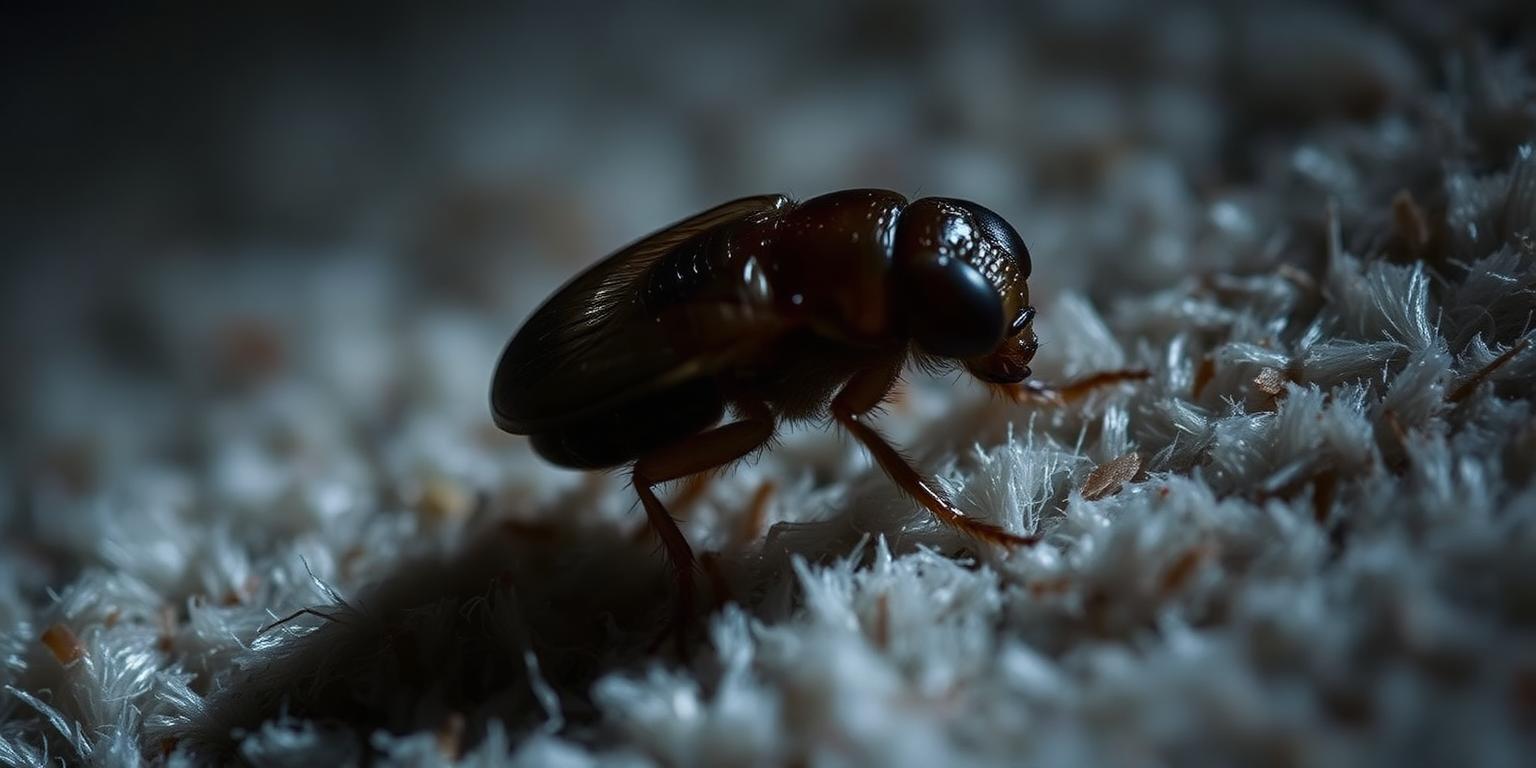
Cat flea
Ctenocephalides felis
Responsible for the overwhelming majority of UK household flea infestations — including in homes with no pets at all.
Quick facts
- Adult size
- 1.5–3.5mm
- Eggs per day
- Up to 50
- Adults in a population
- ~5%
- Pupal dormancy
- Up to months
Also known as: Household flea
Species at a glance
Moderate risk- Scientific name
- Ctenocephalides felis
- Alternative names
- Household flea
- Average size
- 1.5–3.5mm adult
- Average weight
- Under 1mg
- Activity
- Both day and night
- Diet
- Blood. Larvae feed on organic debris and adult flea faeces in the carpet rather than on a host.
- Typical habitat
- Carpets, rugs, pet bedding and upholstered furniture
- Active season
- Late summer into autumn, indoors year-round
Why the moderate risk rating: Irritating bites to ankles and legs; tapeworm vector in pets.
About the cat flea
Despite the name, the cat flea infests cats, dogs, foxes and people alike. Adults are only a small fraction of the population: the majority of an infestation exists as eggs, larvae and pupae in carpet, bedding and floor cracks. Pupae can lie dormant for months and hatch in response to vibration and carbon dioxide — which is why empty properties can suddenly become infested when someone walks in.
- Diet
- Blood. Larvae feed on organic debris and adult flea faeces in the carpet rather than on a host.
- Breeding
- A female lays up to 50 eggs a day. In a warm home the full cycle completes in as little as 2–3 weeks.
- Lifespan
- Adults typically several weeks on a host; pupae can survive dormant for many months.
How to identify it
- 1.5–3.5mm, dark reddish-brown, laterally flattened
- No wings; jumps up to 200 times its own body length
- Larvae are small white worm-like grubs found deep in carpet pile
- Flea dirt is black specks that turn rust-red on damp tissue
Signs, behaviour and where they live
Signs of activity
- Itchy bites, usually clustered around ankles and lower legs
- Pets scratching, biting at the base of the tail or losing fur
- Black flea dirt in pet bedding that turns red when damp
- Small dark insects jumping from carpet when disturbed
- Sudden bites on returning to a property after a period away
Behaviour
- Adults spend most of their time on the host, feeding several times a day
- Only around 5% of the population is adult — the rest is immature stages in the environment
- Pupae are protected by a sticky cocoon that resists insecticide
- Dormant pupae hatch in response to vibration, warmth and CO₂
Where you'll find them
- Carpet pile, rugs and floorboard gaps in rooms pets use
- Pet bedding, sofas and the base of upholstered furniture
- Skirting junctions and beneath radiators
- Lofts and voids where foxes, squirrels or birds have nested
Seasonal activity in Hertfordshire
Twelve-month activity profile for cat fleas, based on our Hertfordshire call-out records.
- JanJanuary: Low activity
- FebFebruary: Low activity
- MarMarch: Moderate activity
- AprApril: Moderate activity
- MayMay: Rising activity
- JunJune: Rising activity
- JulJuly: High activity
- AugAugust: High activity
- SepSeptember: High activity
- OctOctober: Rising activity
- NovNovember: Moderate activity
- DecDecember: Low activity
- Peak period
- July to October
- Right now
- High activity in September
Warm, humid conditions accelerate the life cycle, and central heating in autumn triggers mass emergence of dormant pupae.
Fleas are in their most active period of the year. Warm, humid conditions accelerate the life cycle, and central heating in autumn triggers mass emergence of dormant pupae.
Current local data is limited. The status shown is based primarily on established seasonal behaviour across Hertfordshire. Last reviewed 1 July 2026.
See all Hertfordshire Pest Watch activityWhy cat fleas matter
Health risks
- Flea allergy dermatitis in pets and people
- Secondary infection from scratched bites
- Tapeworm transmission to pets that swallow fleas while grooming
Property damage
- No structural damage — impact is health, comfort and, in lettings, void periods
Cat fleas across Hertfordshire
Flea call-outs across Hertfordshire spike in late summer and again with tenancy changeovers, when new occupants trigger months of dormant pupae in carpets left by a previous pet.
Common misconceptions
No pets means no fleas.
Fleas arrive with previous occupants, visiting animals or wildlife in the loft, and dormant pupae outlast the pet by months.
Treating the pet clears the house.
Roughly 95% of the population is in the carpet, not on the animal. Both must be treated together.
One treatment fixes it.
Insecticide cannot penetrate the pupal cocoon, so a follow-up is normally needed as protected pupae emerge.
Prevention and professional treatment
How to prevent them
- Maintain year-round veterinary flea treatment for all pets
- Vacuum carpets, edges and under furniture frequently — vibration triggers pupal hatch
- Hot-wash pet bedding weekly
- Proof lofts and voids against foxes, squirrels and nesting birds
How we treat them
- Confirm species and identify the source, including any wildlife harbourage
- Preparation brief: thorough vacuuming and clearance of floor areas
- Residual insecticide treatment to all floor areas, edges and soft furnishings
- Instruction to keep vacuuming to trigger and expose emerging pupae
- Follow-up treatment where dormant pupae continue to hatch
Cat flea questions, answered
The questions our technicians are asked most often about cat fleas in Hertfordshire.
Ask anything about the cat flea
This assistant is reading the cat flea profile with you — there's no need to say which pest you mean. Answers are educational and evidence-based.
Questions are recorded anonymously so we can improve HPE Knowledge. No personal data is stored.
Related content in HPE Knowledge
Related species

Related services
Related knowledge
- Prevention guidePractical proofing and housekeeping steps for this species.
- AI Pest IdentifierNot sure what you have? Describe it and get an identification.
- Hertfordshire Pest WatchSeasonal activity across Hertfordshire, reviewed by our technicians.
- Treatment LibraryDocumented treatments and case studies from real jobs.
- Evidence GalleryLabelled field photography showing exactly what to look for.
- Professional Service RecordsSigned, time-stamped records issued after every visit.
Helpful next steps
Professional treatment
Speak to a technician about cat fleas at your property. Fixed price confirmed after a brief inspection.
View treatment optionsView evidence gallery
Labelled field photography showing exactly what the signs look like in a real property.
See the evidenceBrowse the Treatment Library
Documented case studies from treatments carried out across Hertfordshire.
Open the libraryAsk HPE Knowledge
Put a question directly to our cat flea assistant and get an evidence-based answer.
Ask a questionCheck CoverageMaps Pro
Confirm we cover your town, village or postcode and see local activity.
Check coverageContact Hertfordshire Pest Experts
Prefer to talk it through? Call the team or send the details of what you have found.
Get in touchOr head back to the HPE Species Library to compare species.