
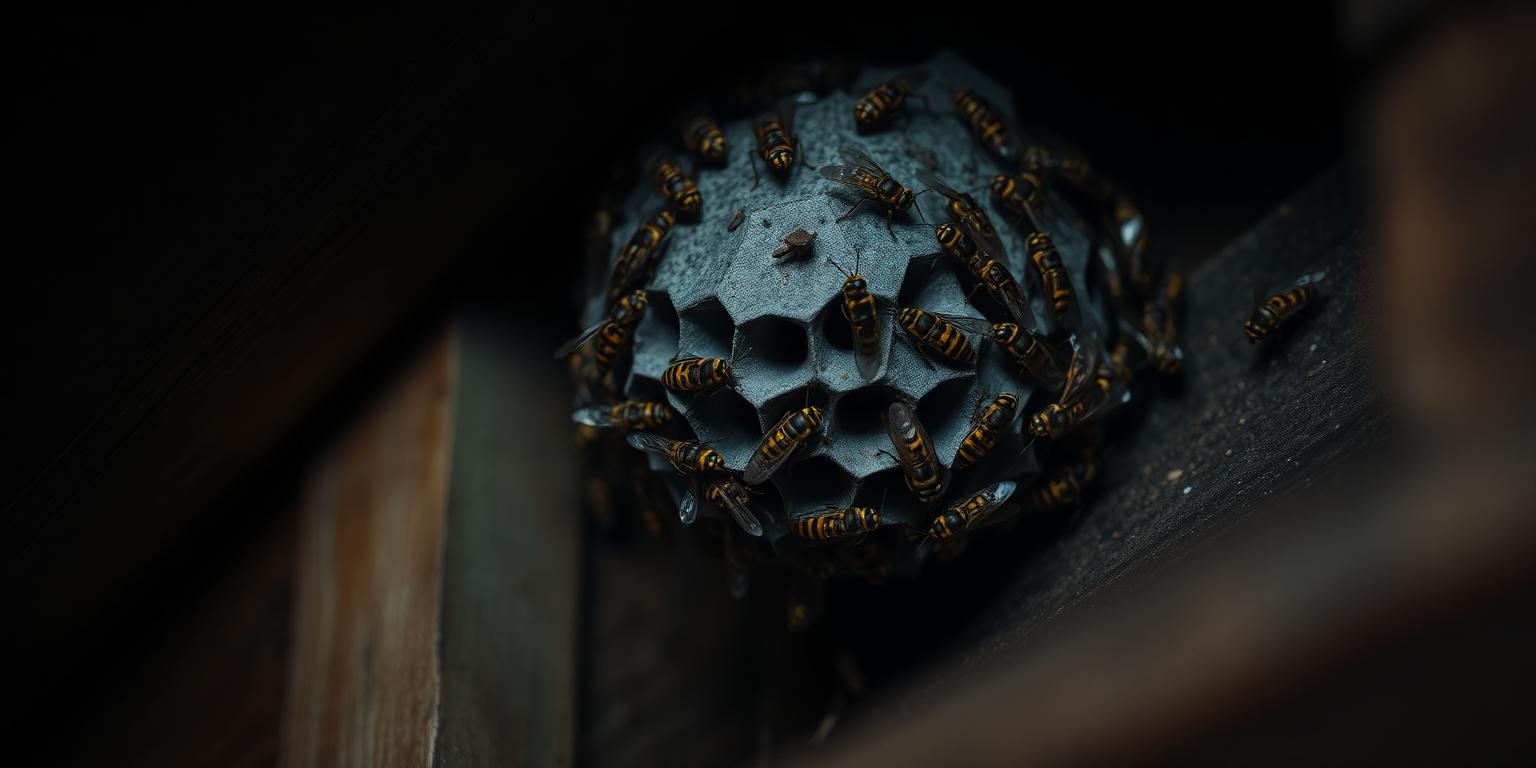
Common wasp
Vespula vulgaris
A social wasp whose nests grow from a golf ball in spring to several thousand workers by late summer, most often in lofts, soffits and cavity walls.
Quick facts
- Peak colony size
- 5,000–10,000
- Nest founded
- April–May
- Peak risk
- July–September
- Response
- Same-day priority
Also known as: Yellowjacket, Garden wasp
Species at a glance
Severe risk- Scientific name
- Vespula vulgaris
- Alternative names
- Yellowjacket, Garden wasp
- Average size
- 12–17mm worker
- Average weight
- Around 80mg
- Activity
- Diurnal
- Diet
- Larvae are fed chewed insect protein; adults live on sugars — nectar, fallen fruit, aphid honeydew and, in late summer, anything sweet within reach.
- Typical habitat
- Loft spaces, wall cavities, sheds, soffits and bank holes
- Active season
- July to September
Why the severe risk rating: Defensive stinging and anaphylaxis risk near an active nest.
About the common wasp
A single overwintered queen founds each nest in spring, building a papery structure from chewed wood fibre. Through summer the colony expands rapidly, and by August the nest may hold 5,000–10,000 workers. Late in the season the colony stops rearing brood, workers switch to sugar, and the familiar aggressive autumn behaviour begins.
- Diet
- Larvae are fed chewed insect protein; adults live on sugars — nectar, fallen fruit, aphid honeydew and, in late summer, anything sweet within reach.
- Breeding
- One queen lays continuously through the season. New queens and males are produced in late summer; only mated queens survive winter to found the next year's nests.
- Lifespan
- Workers live 12–22 days; queens live around a year.
How to identify it
- 12–17mm with sharply defined black and yellow banding
- Anchor-shaped black marking on the face distinguishes it from the German wasp
- Narrow waist and folded wings at rest
- Nests are grey, papery and layered, from golf-ball to football size
Signs, behaviour and where they live
Signs of activity
- A steady stream of wasps entering the same roofline or wall point
- Visible papery nest in a loft, shed or hedge
- Rustling or tapping sounds from a wall cavity or ceiling void
- Chewed timber marks on fences and sheds where fibre has been gathered
- Sudden high wasp numbers indoors, especially at upstairs windows
Behaviour
- Colony founded by one queen in April–May
- Workers forage for insect prey to feed larvae through early summer
- Late summer sugar-seeking makes them bold around food, bins and drinks
- Defend the nest aggressively — vibration and blocking the entrance provoke attack
- Colony dies off with the first hard frosts; nests are never reused
Where you'll find them
- Loft spaces, roof voids and around chimney breasts
- Under soffits, in fascia gaps and behind hanging tiles
- Wall cavities, air bricks and disused vents
- Sheds, garages, garden banks and hedge bases
Seasonal activity in Hertfordshire
Twelve-month activity profile for common wasps, based on our Hertfordshire call-out records.
- JanJanuary: Low activity
- FebFebruary: Low activity
- MarMarch: Rising activity
- AprApril: Rising activity
- MayMay: Rising activity
- JunJune: Rising activity
- JulJuly: High activity
- AugAugust: High activity
- SepSeptember: High activity
- OctOctober: Rising activity
- NovNovember: Low activity
- DecDecember: Low activity
- Peak period
- July to September
- Right now
- High activity in September
Nest size and aggression peak in late summer — this is when the overwhelming majority of Hertfordshire wasp call-outs occur. Exact timing shifts slightly with temperature and rainfall.
Wasps are in their most active period of the year. Nest size and aggression peak in late summer — this is when the overwhelming majority of Hertfordshire wasp call-outs occur. Exact timing shifts slightly with temperature and rainfall.
Current local data is limited. The status shown is based primarily on established seasonal behaviour across Hertfordshire. Last reviewed 1 July 2026.
See all Hertfordshire Pest Watch activityWhy do wasps seem to come back in late summer?
During late August and September, it can sometimes seem as though common wasps have suddenly made a comeback.
In most cases, the colony has not disappeared and restarted. Established wasp nests can be at or close to their largest at this point in the season, containing thousands of workers.
As the colony's lifecycle changes, workers become increasingly attracted to readily available sources of sugar. This is why wasps can suddenly become much more noticeable around gardens, bins, outdoor eating areas, drinks and ripe or fallen fruit.
Weather can also influence how much activity we see. After periods of very hot weather, slightly cooler but still mild and dry conditions can result in increased daytime foraging, making an established population appear to have suddenly returned.
Common wasps can remain active throughout September and into October. During particularly mild autumns, activity may occasionally continue even later. Sustained cold weather and frost eventually bring the annual colony cycle to an end.
HPE Pest Expert Note
More wasps does not necessarily mean more nests. Late-summer colonies are mature and their workers are often travelling further from the nest looking for sugary food. Large numbers around fruit, bins or outdoor food may therefore originate from a nest some distance away.
Why common wasps matter
Health risks
- Painful stings, and multiple stings when a nest is disturbed
- Anaphylaxis in sensitised individuals — a medical emergency
- Contamination of food in kitchens, outdoor dining and commercial premises
Property damage
- Staining and ceiling damage from large nests in voids
- Insulation displacement in loft spaces
- Persistent nuisance and lost trade for pubs, cafés and food businesses
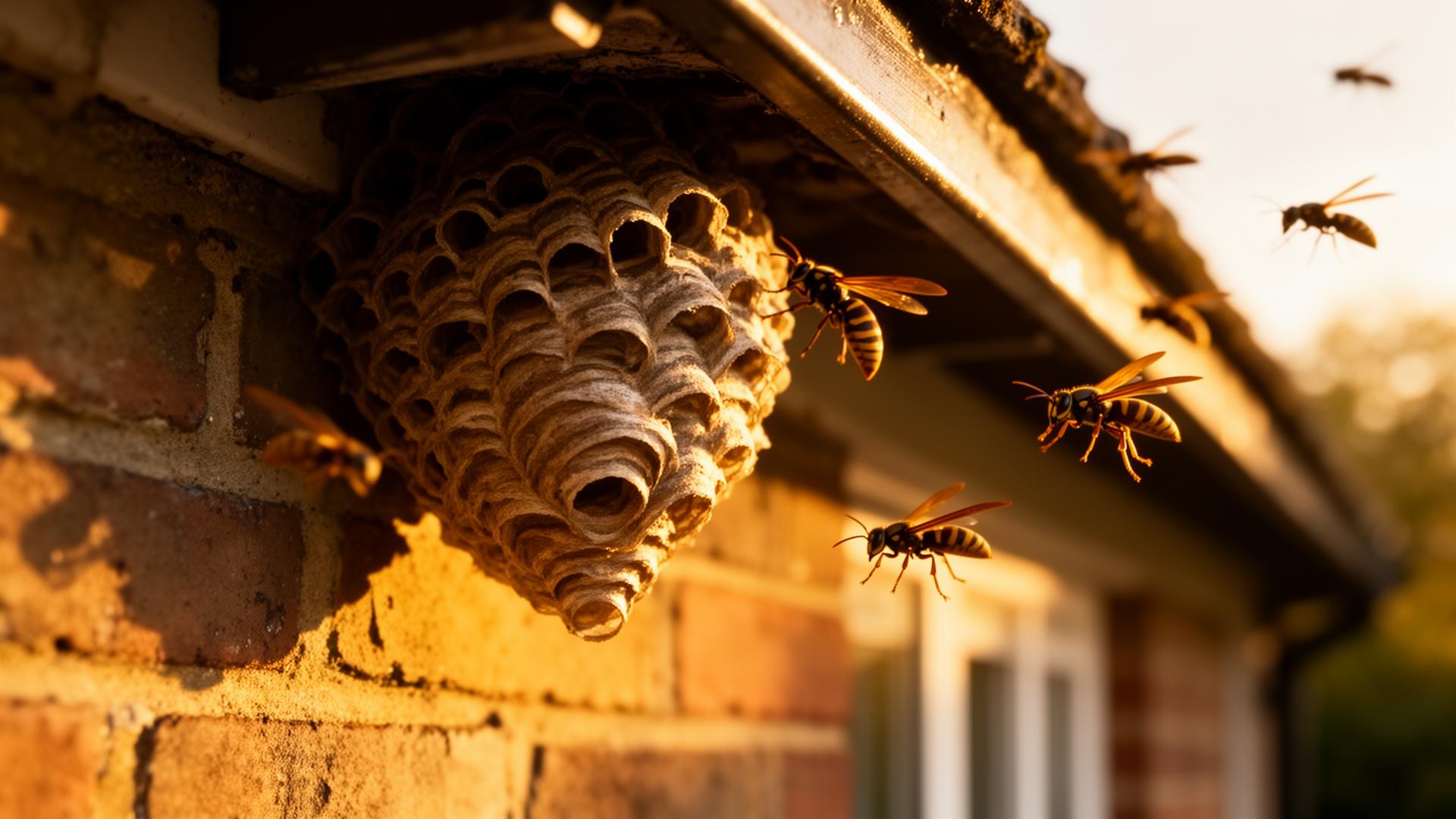
Common wasps across Hertfordshire
Hertfordshire's older housing stock, with open eaves and hanging tiles, gives queens abundant nesting cavities. Wasp call-outs across the county cluster tightly into a six-week window from mid-July, when nests reach full size.
What common wasp evidence looks like
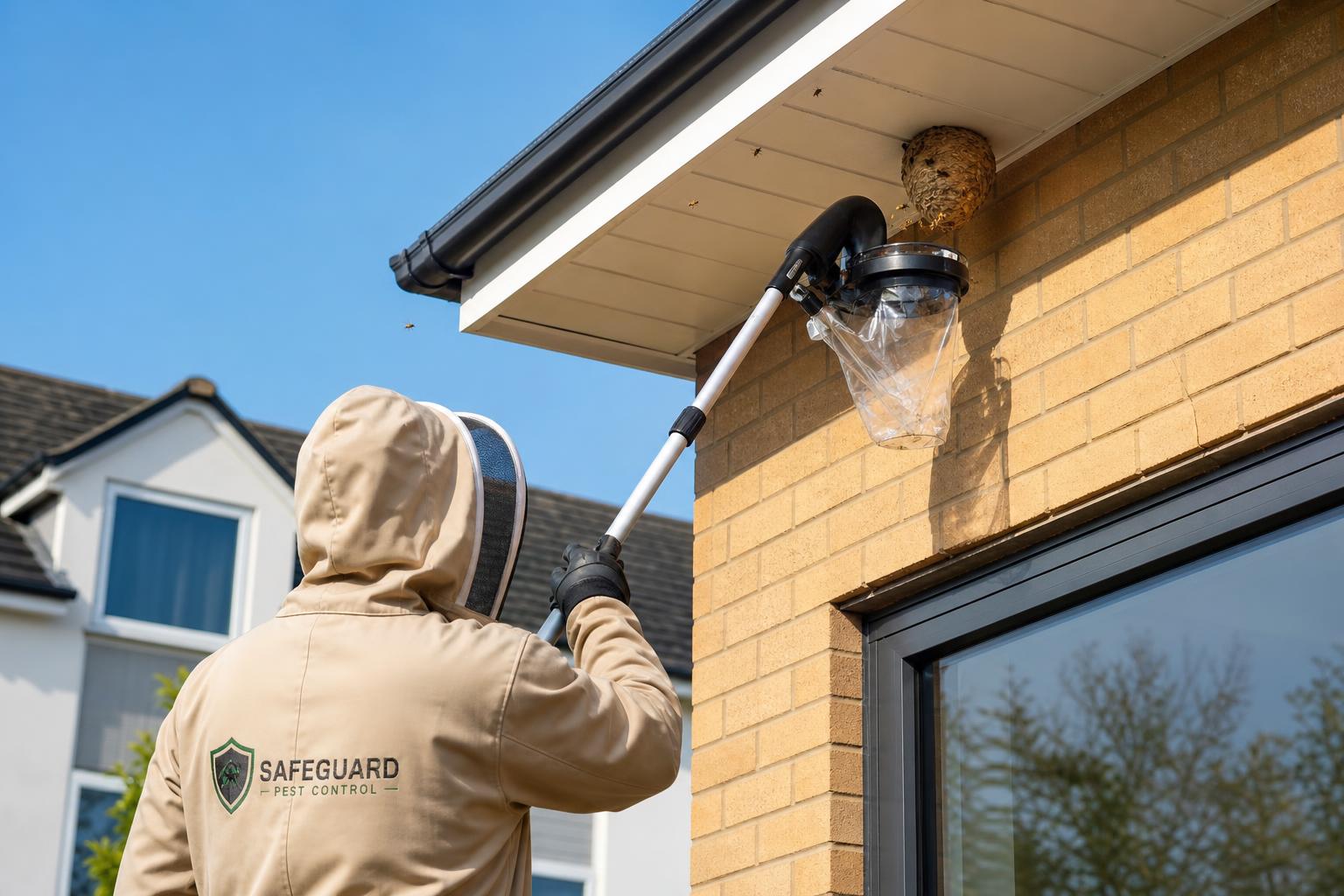
Roofline nest entry
Wasps entering a nest behind a soffit — the most common domestic location.
Loft nest
Established papery nest built against loft timbers.
Common misconceptions
Wasps have no purpose.
They are significant predators of garden pests and secondary pollinators — we only treat nests that present a genuine risk.
Blocking the entrance kills the nest.
It forces wasps to chew a new exit — frequently into the room below — and provokes stinging.
Nests get reused each year.
A nest is used for one season only. Removing a dead winter nest is optional, though we'll advise on proofing the entry point.
Prevention and professional treatment
How to prevent them
- Inspect lofts and sheds in April–May when nests are still small
- Fit mesh to airbricks, vents and open eaves gaps
- Keep bins sealed and clear fallen fruit through late summer
- Repair damaged soffits and fascia boards before spring
How we treat them
- Locate the nest and confirm the flight path before any treatment
- Apply professional insecticidal dust directly to the nest entrance
- Allow returning foragers to carry treatment into the colony
- Advise on safe exclusion times for people and pets
- Optional nest removal and proofing of the entry point once activity ceases
Common wasp questions, answered
The questions our technicians are asked most often about common wasps in Hertfordshire.
Ask anything about the common wasp
This assistant is reading the common wasp profile with you — there's no need to say which pest you mean. Answers are educational and evidence-based.
Questions are recorded anonymously so we can improve HPE Knowledge. No personal data is stored.
Related content in HPE Knowledge
Related species
Related services
Related knowledge
- Prevention guidePractical proofing and housekeeping steps for this species.
- AI Pest IdentifierNot sure what you have? Describe it and get an identification.
- Hertfordshire Pest WatchSeasonal activity across Hertfordshire, reviewed by our technicians.
- Treatment LibraryDocumented treatments and case studies from real jobs.
- Evidence GalleryLabelled field photography showing exactly what to look for.
- Professional Service RecordsSigned, time-stamped records issued after every visit.
Helpful next steps
Professional treatment
Speak to a technician about common wasps at your property. Fixed price confirmed after a brief inspection.
View treatment optionsView evidence gallery
Labelled field photography showing exactly what the signs look like in a real property.
See the evidenceBrowse the Treatment Library
Documented case studies from treatments carried out across Hertfordshire.
Open the libraryAsk HPE Knowledge
Put a question directly to our common wasp assistant and get an evidence-based answer.
Ask a questionCheck CoverageMaps Pro
Confirm we cover your town, village or postcode and see local activity.
Check coverageContact Hertfordshire Pest Experts
Prefer to talk it through? Call the team or send the details of what you have found.
Get in touchOr head back to the HPE Species Library to compare species.