
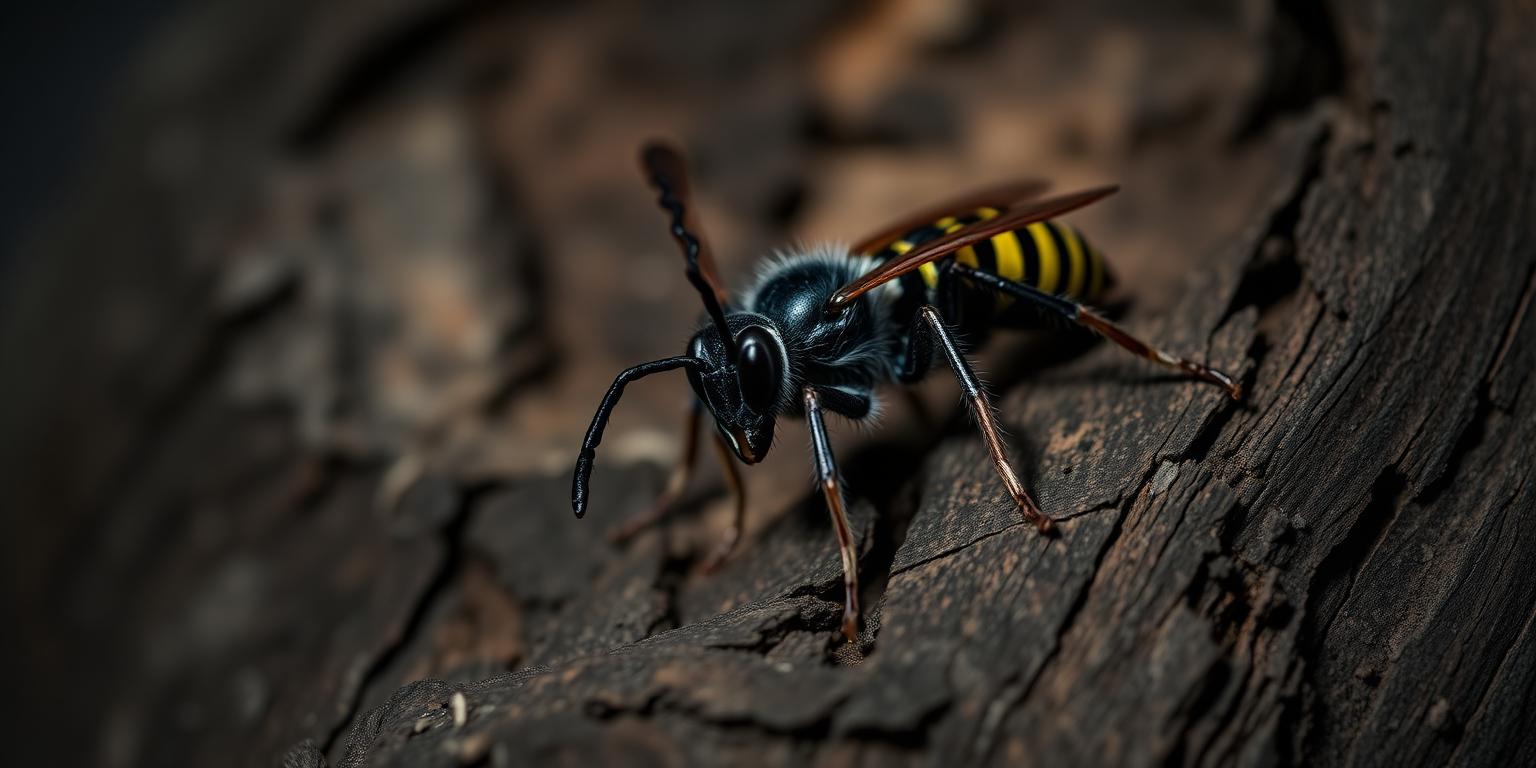
European hornet
Vespa crabro
Britain's largest social wasp — imposing but far less aggressive than the common wasp, and a protected part of the ecosystem where it poses no risk.
Quick facts
- Adult size
- 25–35mm
- Colony size
- Few hundred
- Peak
- Aug–Sept
- Aggression
- Low away from nest
Also known as: Brown hornet, Giant hornet (incorrectly)
Species at a glance
High risk- Scientific name
- Vespa crabro
- Alternative names
- Brown hornet, Giant hornet (incorrectly)
- Average size
- 25–35mm worker
- Average weight
- Around 300mg
- Activity
- Both day and night
- Diet
- Adults take tree sap and fruit sugars; larvae are fed chewed insect prey, including large numbers of common wasps.
- Typical habitat
- Hollow trees, outbuildings, chimneys and quiet loft voids
- Active season
- August to September
Why the high risk rating: Painful stings, though far less defensive than common wasps.
About the european hornet
The European hornet is a native social wasp roughly twice the size of a common wasp, with a chestnut-brown and yellow colouring rather than crisp black and yellow. Colonies are much smaller — typically a few hundred workers — and hornets are markedly less defensive away from the nest. They are, however, attracted to light and often enter homes at night through open windows.
- Diet
- Adults take tree sap and fruit sugars; larvae are fed chewed insect prey, including large numbers of common wasps.
- Breeding
- A single queen founds the nest in spring; colonies rarely exceed a few hundred workers.
- Lifespan
- Workers a few weeks; queens around a year.
How to identify it
- 25–35mm — noticeably larger than a common wasp
- Chestnut-brown thorax with yellow and brown abdominal banding
- Deeper, slower flight with an audible low hum
- Nests are brown, papery and usually built in hollow trees, chimneys or lofts
Signs, behaviour and where they live
Signs of activity
- Very large brown-and-yellow wasps entering a chimney, tree or loft
- Hornets repeatedly hitting lit windows after dark
- Loud, low-pitched buzzing from a void or chimney breast
- Chewed bark stripping on nearby shrubs
Behaviour
- Active by day and unusually also at night, when they are drawn to lit windows
- Far less defensive than common wasps unless the nest is disturbed
- Prey on large insects including wasps, beetles and moths
- Colony dies off in autumn; only mated queens overwinter
Where you'll find them
- Hollow trees and woodland edges
- Chimneys, loft voids and outbuildings
- Wall cavities in rural and semi-rural properties
Seasonal activity in Hertfordshire
Twelve-month activity profile for european hornets, based on our Hertfordshire call-out records.
- JanJanuary: Low activity
- FebFebruary: Low activity
- MarMarch: Low activity
- AprApril: Low activity
- MayMay: Rising activity
- JunJune: Rising activity
- JulJuly: Rising activity
- AugAugust: High activity
- SepSeptember: High activity
- OctOctober: Rising activity
- NovNovember: Low activity
- DecDecember: Low activity
- Peak period
- August to September
- Right now
- High activity in September
Colonies mature later than common wasps, so hornet call-outs cluster in late August and September.
Why european hornets matter
Health risks
- Sting is painful but no more medically significant than a common wasp for most people
- Anaphylaxis risk in sensitised individuals
- Multiple stings possible if a nest is disturbed at close range
Property damage
- Nest staining in chimney breasts and loft voids
- Rarely structural — impact is mostly nuisance and risk of stings
European hornets across Hertfordshire
Hornets are most often reported from the wooded and rural fringes of Hertfordshire — around Ashridge, Broxbourne Woods and the Chiltern edge — where hollow mature trees and open chimneys provide ideal nest sites.
Common misconceptions
Hornets are deadly.
A European hornet sting is comparable to a wasp sting. They are considerably less aggressive than common wasps.
It's an Asian hornet.
Asian hornets are smaller, darker and have distinctive yellow legs. Suspected Asian hornet sightings should be reported to the national alert service.
Every hornet nest must be destroyed.
Where a nest is well away from people we'll usually advise leaving it. We treat risk, not wildlife.
Prevention and professional treatment
How to prevent them
- Cap open chimneys and mesh loft vents
- Close windows at dusk in late summer or fit fly screens
- Inspect outbuildings in spring while nests are small
How we treat them
- Confirm species — Asian hornet sightings are reported, not simply treated
- Risk-assess whether treatment is genuinely necessary
- Apply professional insecticidal dust to the nest entrance where treatment is justified
- Advise exclusion periods and proof the entry point afterwards
Treatments for european hornets
European hornet questions, answered
The questions our technicians are asked most often about european hornets in Hertfordshire.
Ask anything about the european hornet
This assistant is reading the european hornet profile with you — there's no need to say which pest you mean. Answers are educational and evidence-based.
Questions are recorded anonymously so we can improve HPE Knowledge. No personal data is stored.
Related content in HPE Knowledge
Related species
Related knowledge
- Prevention guidePractical proofing and housekeeping steps for this species.
- AI Pest IdentifierNot sure what you have? Describe it and get an identification.
- Hertfordshire Pest WatchSeasonal activity across Hertfordshire, reviewed by our technicians.
- Treatment LibraryDocumented treatments and case studies from real jobs.
- Evidence GalleryLabelled field photography showing exactly what to look for.
- Professional Service RecordsSigned, time-stamped records issued after every visit.
Helpful next steps
Professional treatment
Speak to a technician about european hornets at your property. Fixed price confirmed after a brief inspection.
View treatment optionsView evidence gallery
Labelled field photography showing exactly what the signs look like in a real property.
See the evidenceBrowse the Treatment Library
Documented case studies from treatments carried out across Hertfordshire.
Open the libraryAsk HPE Knowledge
Put a question directly to our european hornet assistant and get an evidence-based answer.
Ask a questionCheck CoverageMaps Pro
Confirm we cover your town, village or postcode and see local activity.
Check coverageContact Hertfordshire Pest Experts
Prefer to talk it through? Call the team or send the details of what you have found.
Get in touchOr head back to the HPE Species Library to compare species.